


For years, a blank page was the most intimidating object one could give me. Emotionally matching the paper’s emptiness, I could stare at it for hours without a single idea of what to do with that giant, looming paper space. While lying in bed, driving, or working, hundreds of ideas would stream throughout my body. However, when that blank page arrived, ideas were nowhere to be found. At that time, the potential that lies in a blank page was overwhelming.
A shift in my perspective came out of the practice of writing in structured journals. Once the page was divided into subsections with prompts, it became much easier to write. An organized page with the word “Ideas” and a set of blank lines gave the necessary structure to write down some of the ideas percolating in the background. Three empty lines following the prompt, What 3 things are you grateful for?, eventually formed into an appreciation of structured journaling practices. As grateful as I am to the creators and publishers of the many journals and practices out there, this article is NOT intended to lead you to a link to purchase the newest artistic journal. I know, this is a little different from what you may find in influenced threads. Instead, my hope here is to demonstrate that perspectives can change through simple structures and prompts. Eventually, with a balance of consistent practice and grace for inconsistent breaks, the divided subsections became too small, and I desired a larger blank page.
In a recent hospital visit to a friend struggling with a mental health crisis, I noticed how blank everything was in their room. Besides the beeping tech gadgets, there was literally nothing in this boring room. No pictures. No stripes. Not even colored paint. A small television opposite the bed provided the only break from the plain white walls. When turned off, it looked like a black square of blank. There were multiple windows which were blocked out with shades upon my arrival. In nature, I am yet to find a space as blank as this hospital room. Even in a whiteout from a snowstorm, there is a distinguishable texture to the flakes swirling around. For my own comfort, I drew the shades and looked outside.
During my next visit, I brought in some art to fill the void. A bit frustrated by the medical discussions based solely on medication, I needed to mix things up for my friend. I admit passing through hospital security felt strange with these wooden pieces, but I had to try something different. The old creation sitting dormant in my house was made from wood burned and charcoal on pine wood cookies from a fallen tree. It was inspired by Miguel León-Portilla’s work studying the ancient Nahautl mind. In the ancient culture, it was understood that every “person” is made up of ixtli and yóllotl (face and heart). I see people each having a visible and hidden side to both the heart and face.
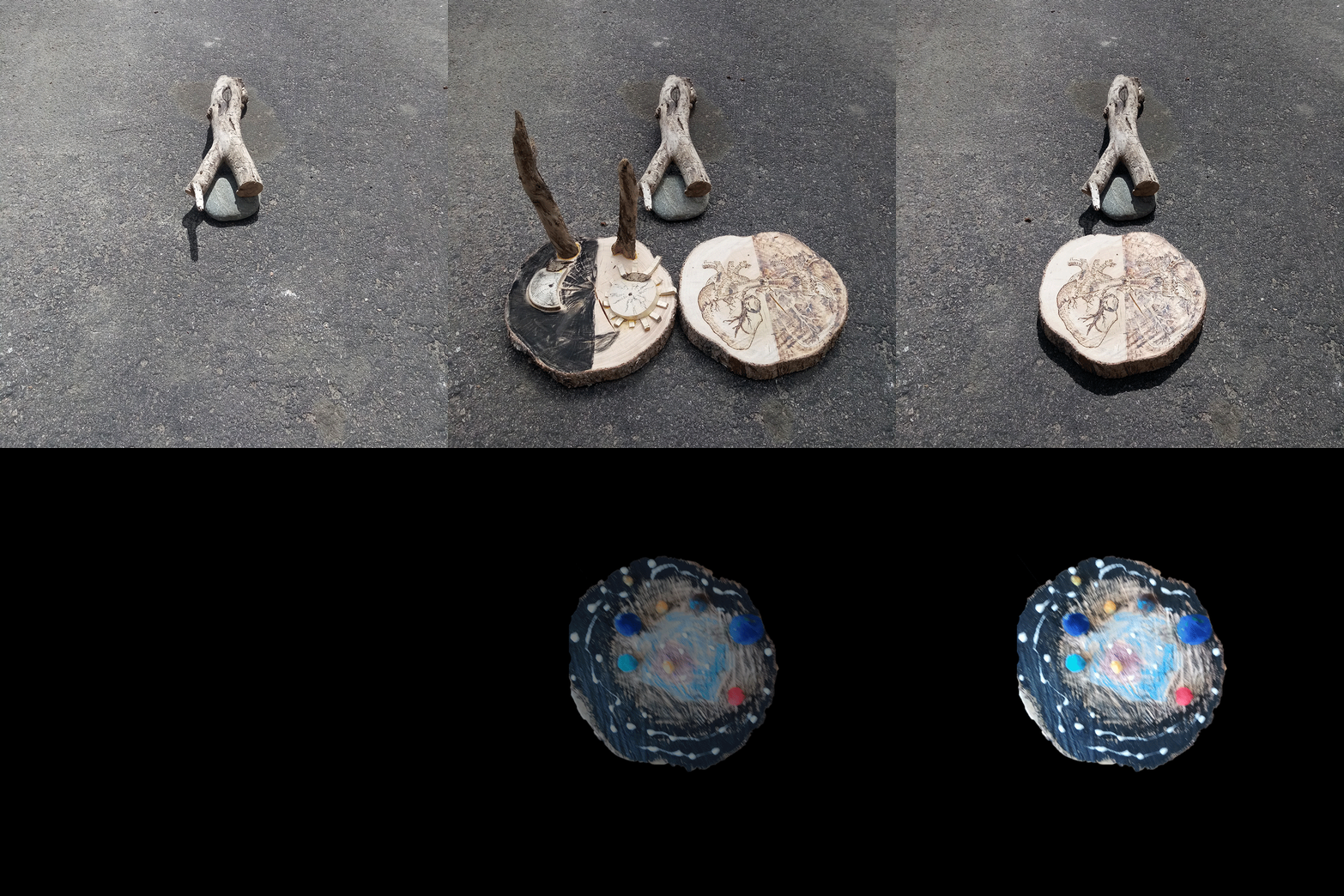
I would be grossly exaggerating if I said this artwork cured my friend. However, I did notice a slight change in their perspective. I would even go as far as saying, previous to my little art showing, this person had a blank face. To express from the heart through the face is a gift we all share as humans. Sometimes we need a reminder of the heart and a little structure from others.
New to the field of Expressive Arts Consulting and Education, I am faced once again with a blank page. This time it is in the form of an empty room. In the past 6 months, I have rented space, gathered supplies, and developed workshops in an attempt to gain experience and spread the healing power of creativity. All of this effort however, has been met with empty chairs and very little participation, partially due to the small mountain rural area in which I reside. The potential in this work is once again large, and I hope to fill the room with expression in the future.
About Chris Clark
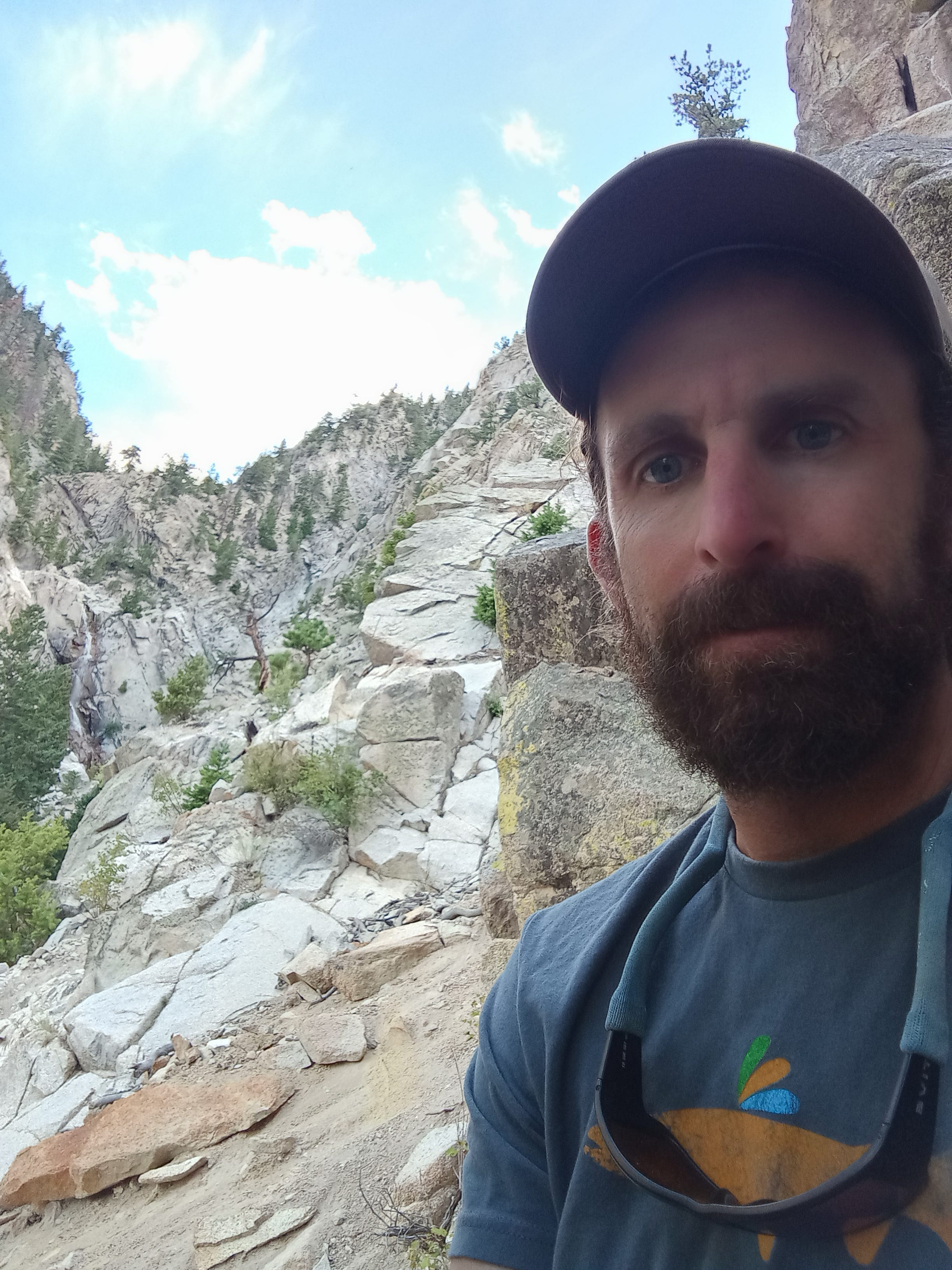
Chris Clark is an arts-based researcher, bus driver, and outdoor adventure guide, and is working to become a registered expressive arts educator/consultant. He holds an M.A. in Engaged Humanities and the Creative Life. Chris currently resides on the North American Continental Divide.