

Shared Resonance and Transformation: An Experience at the Beaux-Arts Paris, France, July 2025
By Rachna Toshniwal and Aurélie Beer

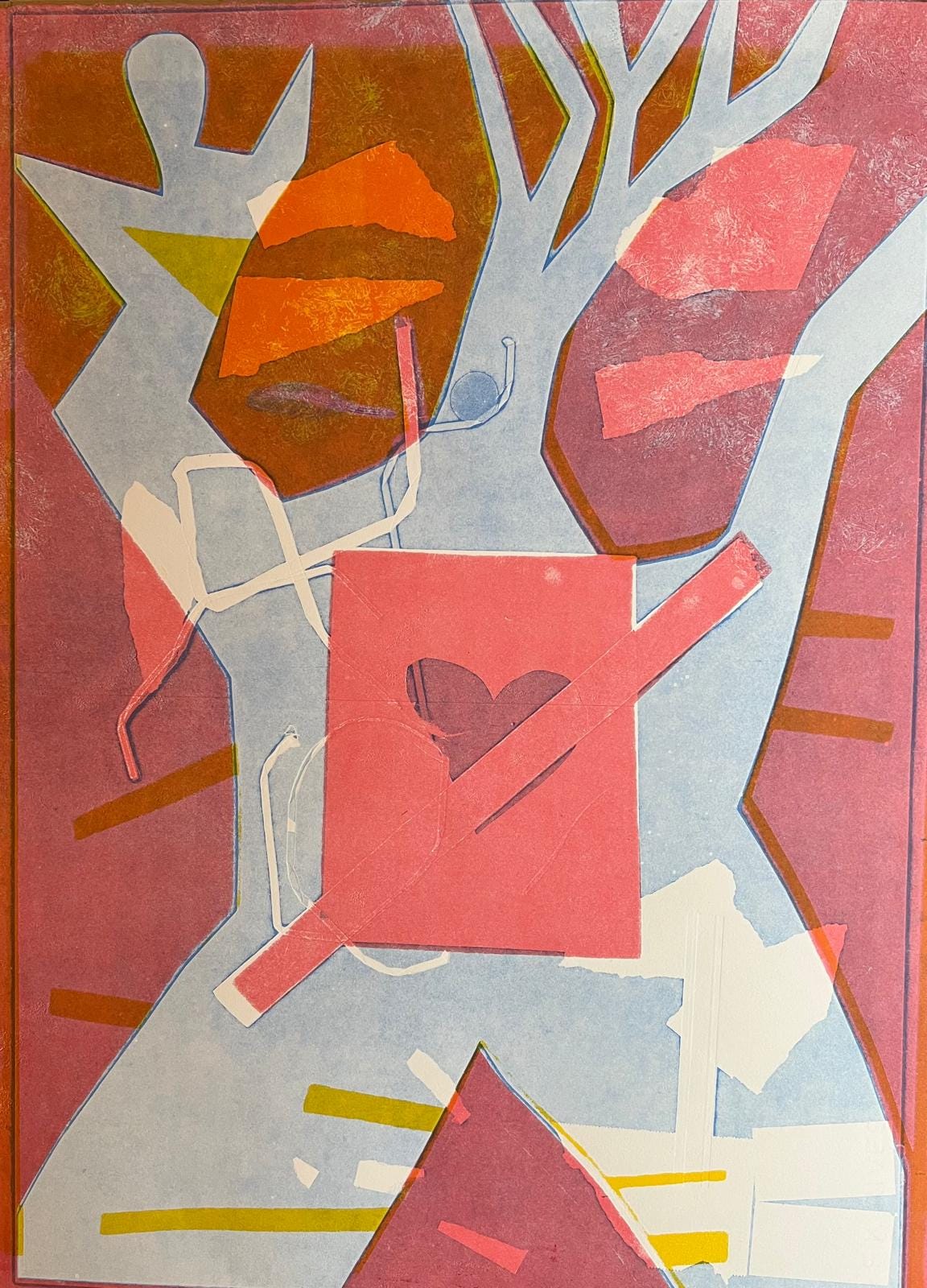
In early July 2025, Rachna and I took part in an intensive one-week printmaking workshop at the Beaux-Arts. I had initiated the plan, and Rachna decided to join me, giving the project an unexpected and enriching collaborative dimension. Despite the constraints of a limited workspace, we had access to high-quality materials and the guidance of an experienced teacher.
For me, this workshop was a return to a technique I had not practiced for twenty-five years: printmaking, and more specifically, working with image reversal—a process that is both cognitively and perceptually demanding. The group dynamic was stimulating, with participants from diverse backgrounds, offering a context rich in exchange and inspiration.
As artists and expressive arts therapists, we approach any artistic practice with an acute awareness of its expressive and therapeutic potential. At times, this awareness can facilitate the creative process; at other times, it can make it more complex, as art can act as a catalyst for emerging emotions. This week coincided, for both of us, with the closure of significant personal life cycles, which amplified the emotional intensity of our engagement.
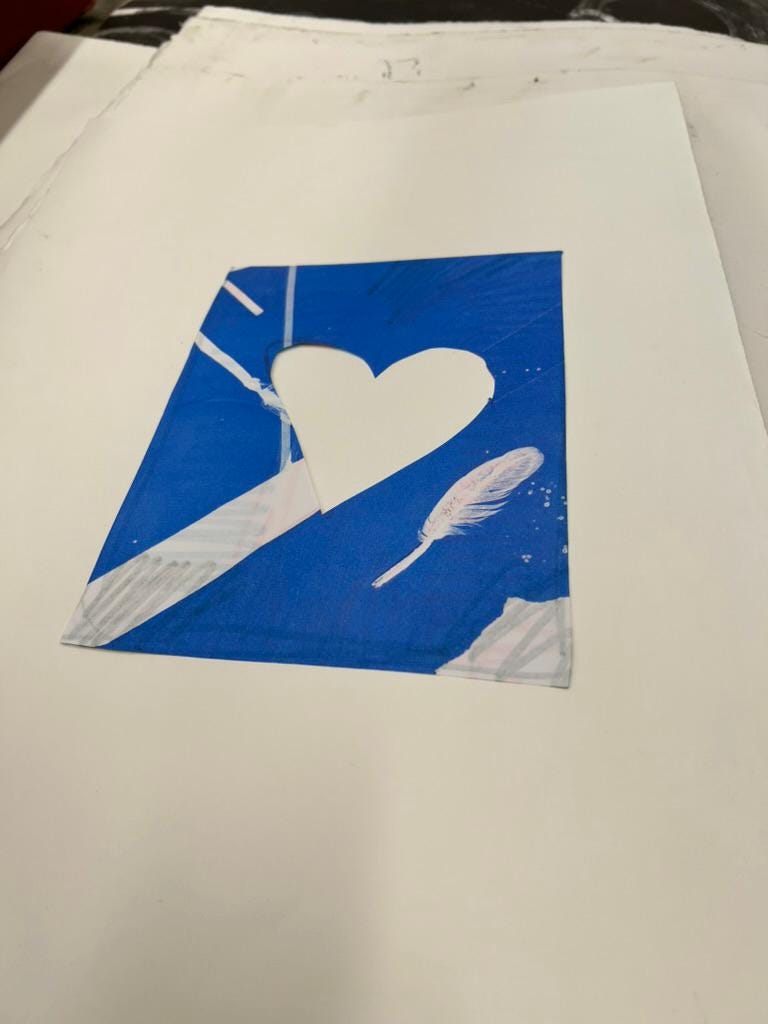
At the end of the week, we chose to create a joint work—an undertaking far more complex than working individually. In order to collaborate harmoniously, I felt the need to complete my own creative process before fully opening to Rachna’s. This allowed me to avoid projecting my personal difficulties into the shared work, aligning with a professional stance in which autonomy and personal responsibility precede co-creation.
The week was marked by profound and intense conversations, deepening our friendship and artistic partnership. We closed this period with a visit to an exhibition by French artist Niki de Saint Phalle au grand Palais, whose exploration of creative processes provided a stimulating echo to our own experience.
This immersion confirmed a personal conviction: to create together, one must first stand as a strong individual and a strong artist. Co-creation inevitably requires relinquishing part of oneself—a “letting go” that, rather than diminishing, enriches the shared work.
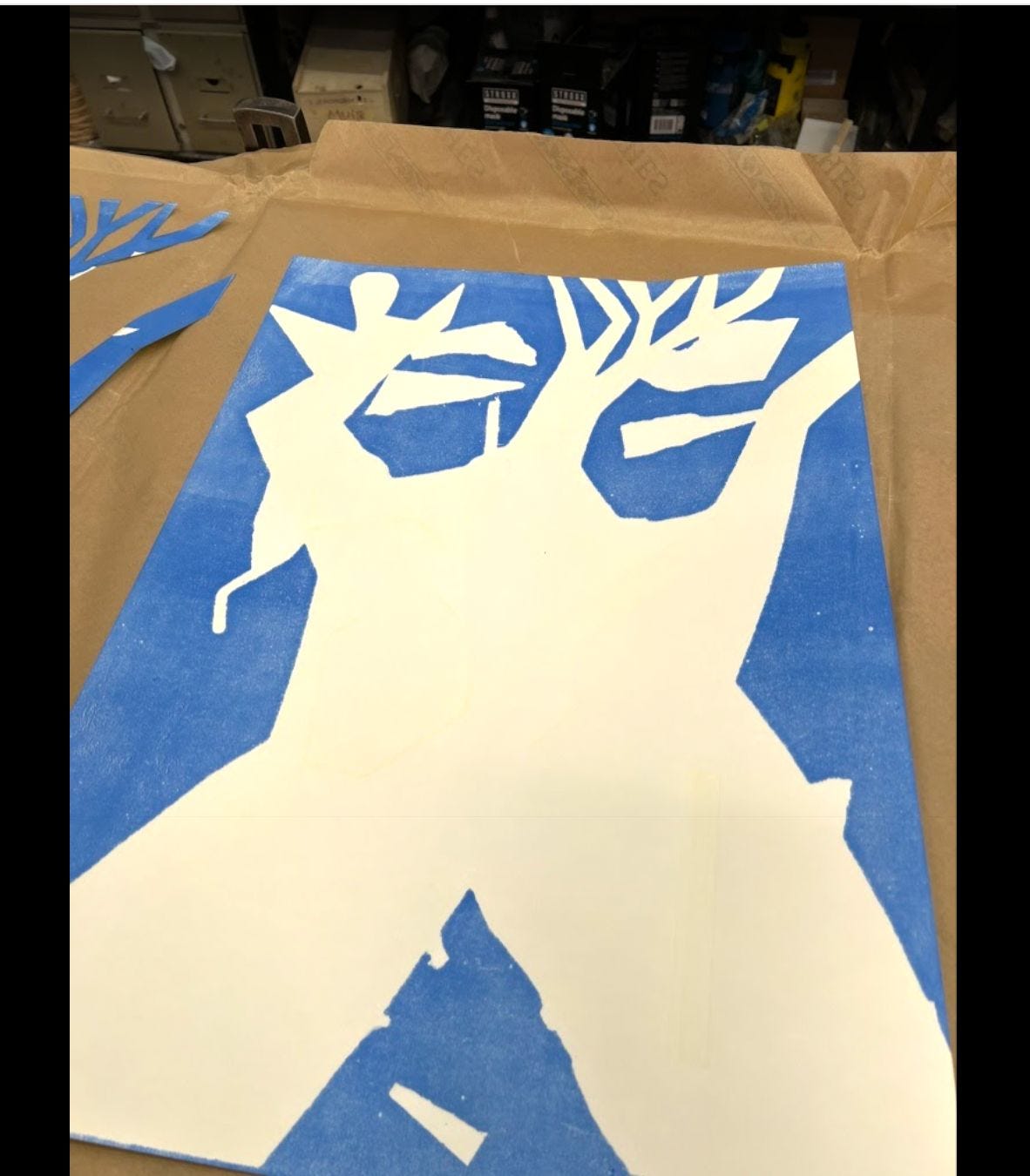
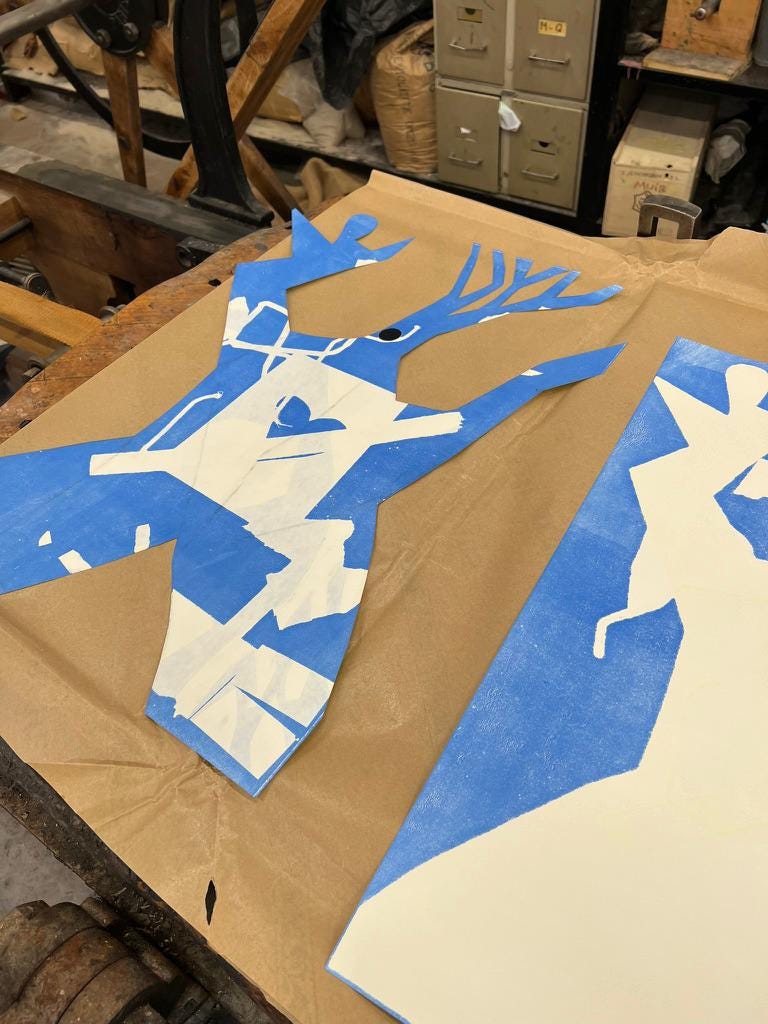
What stood out during this week with Aurélie and returning to the art-making process in general (after a long hiatus) was that only when one does the work, do things transform. And by work, I mean the internal as well as external work – of feeling the feelings and allowing them to emerge, express and resolve – and when this happens, a deep sense of resonance is created. For what I am is no different from how I am in my art-making process (which in this case was very challenging), and what emerges is also a reflection of that struggle, difficulty and challenge.
Being there with Aurélie enabled an honest exploration of this process. There was nowhere to hide. And as we created art standing side by side, and continued the conversations at home, in the kitchen, on the bus and in the cafes, we did find resonance – not the kind that makes it a single shared note – but the kind that comes from facing and speaking our truths and being open and vulnerable to sharing them.
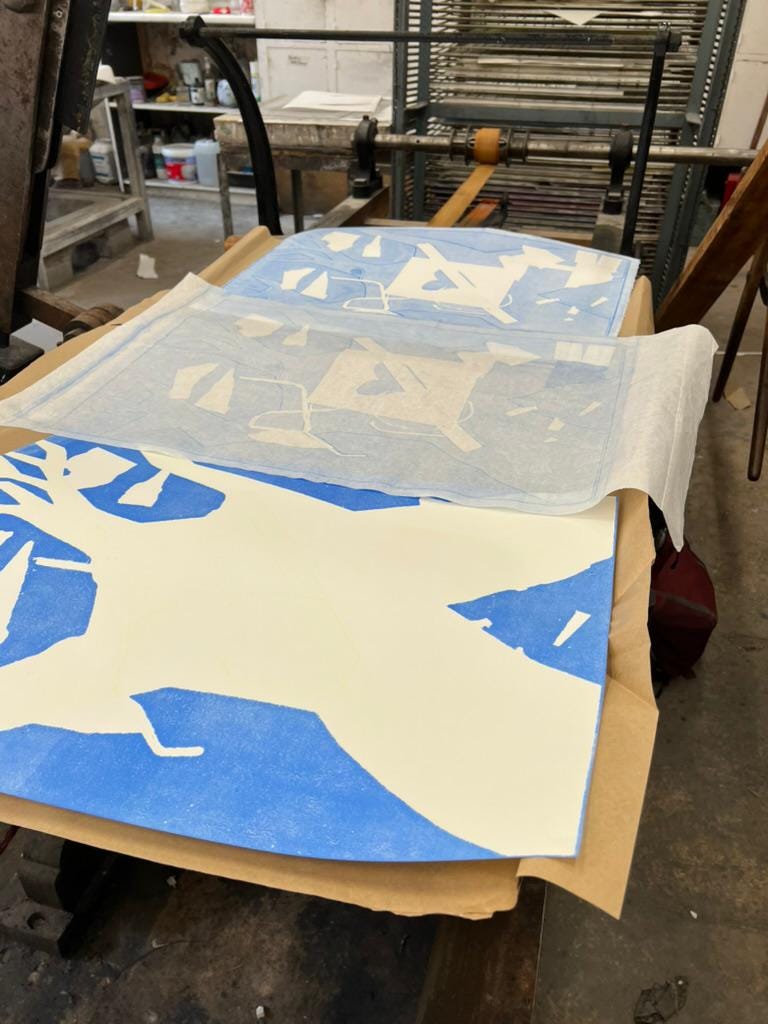
Giving voice is resonance – speech is vibration, and when one listens and speaks from that space of authenticity, shared resonance is the outcome. And this enabled our coming together to co-create an art piece together – negotiating, sharing, and experimenting in a free-flow, sans ego and personal preferences and yet being clear of our own individual process and aesthetic. In this way, together we were able to hold space for the third, and the emergent artwork reflects how co-creation combined with shared resonance can move us beyond our own limits, as we continue to learn to resonate within to resonate with the other.
About Aurélie Beer
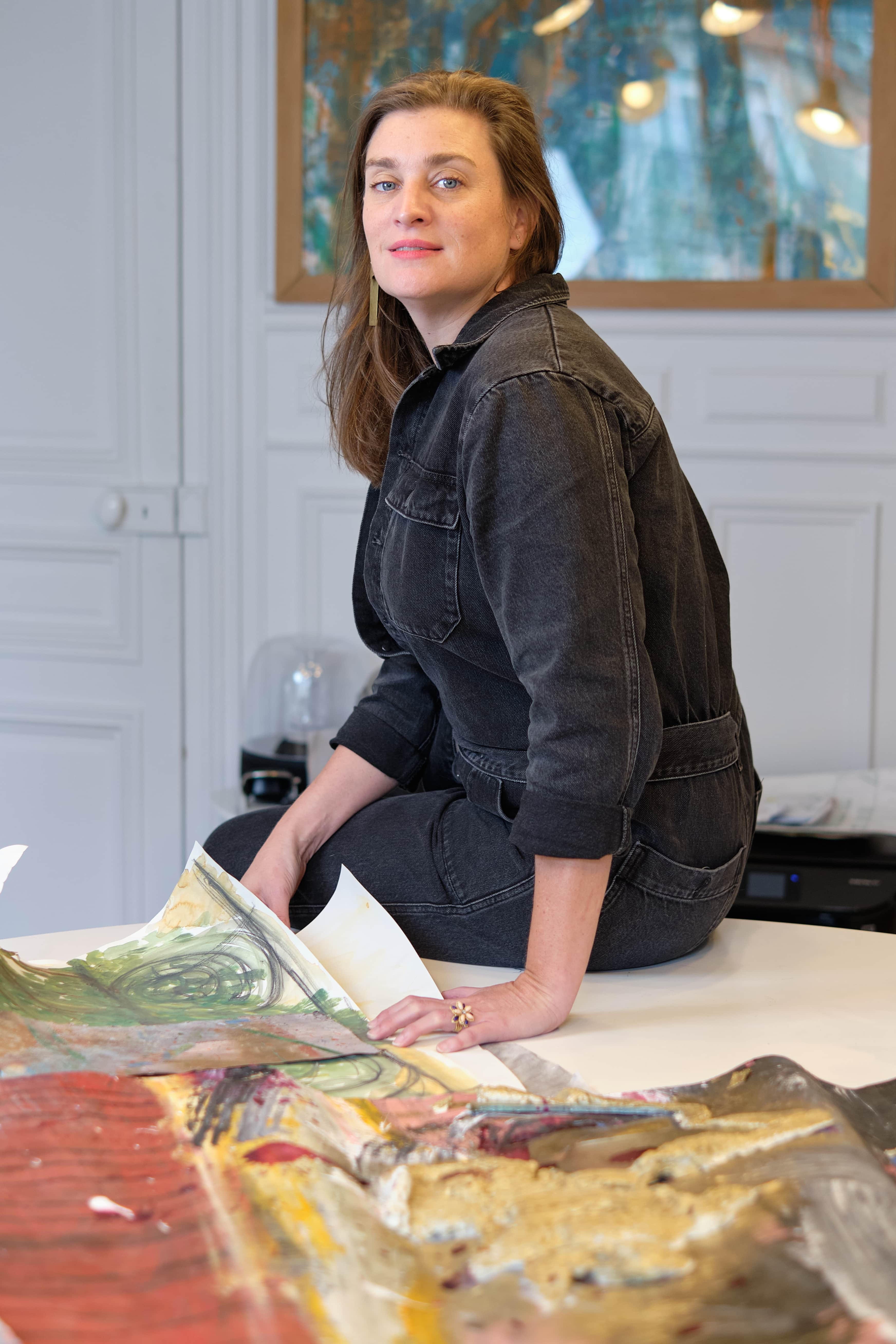
Aurélie Beer is an artist and expressive art therapist. She dedicates herself to her artistic investigation in her studio in Paris and accompanies clients through the arts. She explores painting, writing, dancing, theatre performance and music. Her genealogical tree is a source of research and inspiration that illuminates her present.
About Rachna Toshniwal
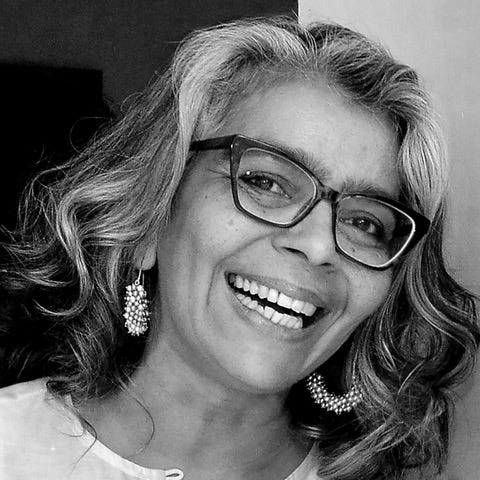
Creativity, community and consciousness are the three pillars of Rachna’s artistic explorations. She uses the arts to dive deeper into questions of self, nature and ways of being; enquiring into the idea that we are nature. Her practice spans, visual arts, performance, creative writing and installations. She lives and works in Mumbai, India