

WEAVING INTERCONNECTIONS - Community, Art and Nature: An Artist’s journey into Reconnection
By Rachna Toshniwal

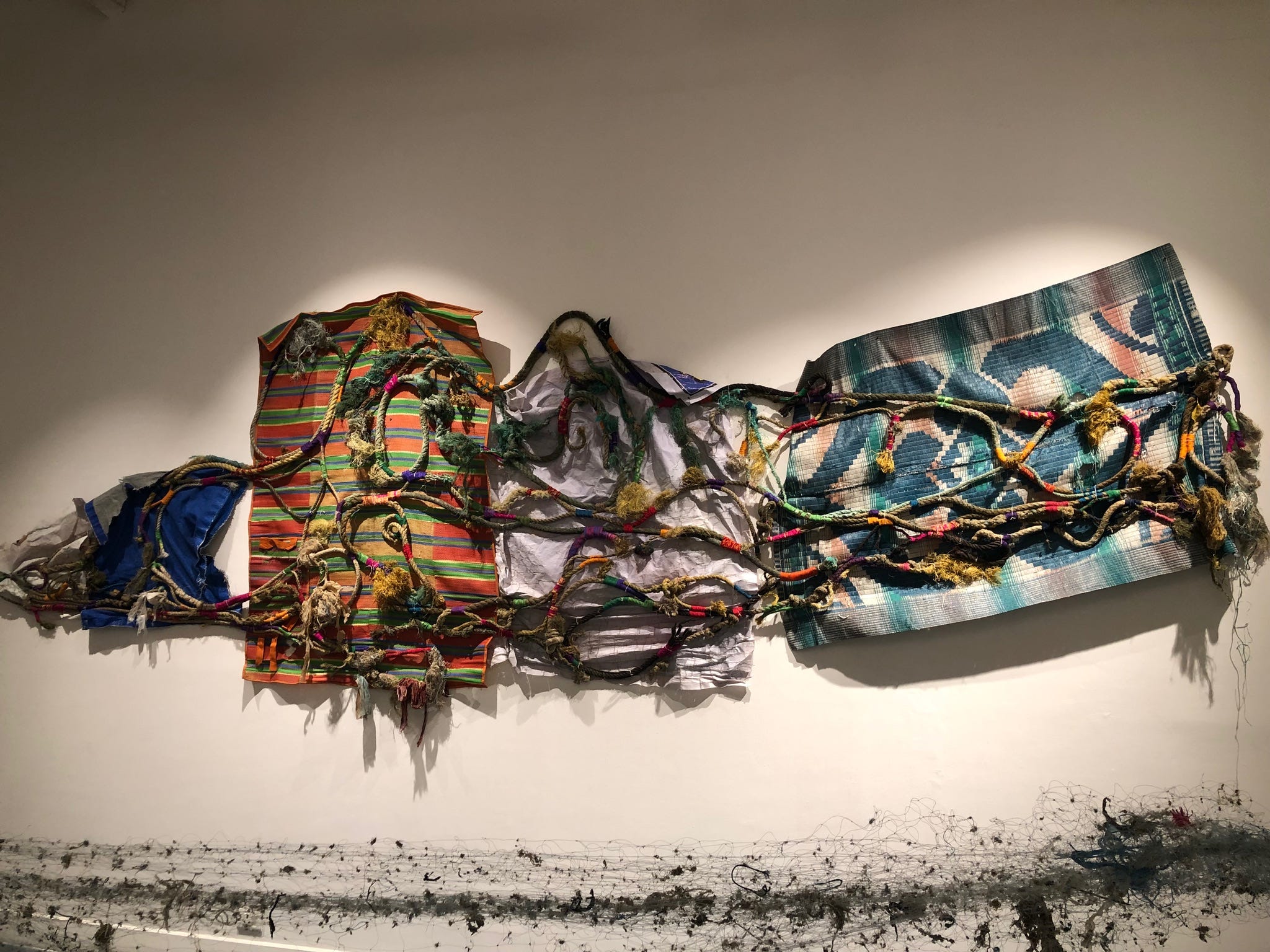
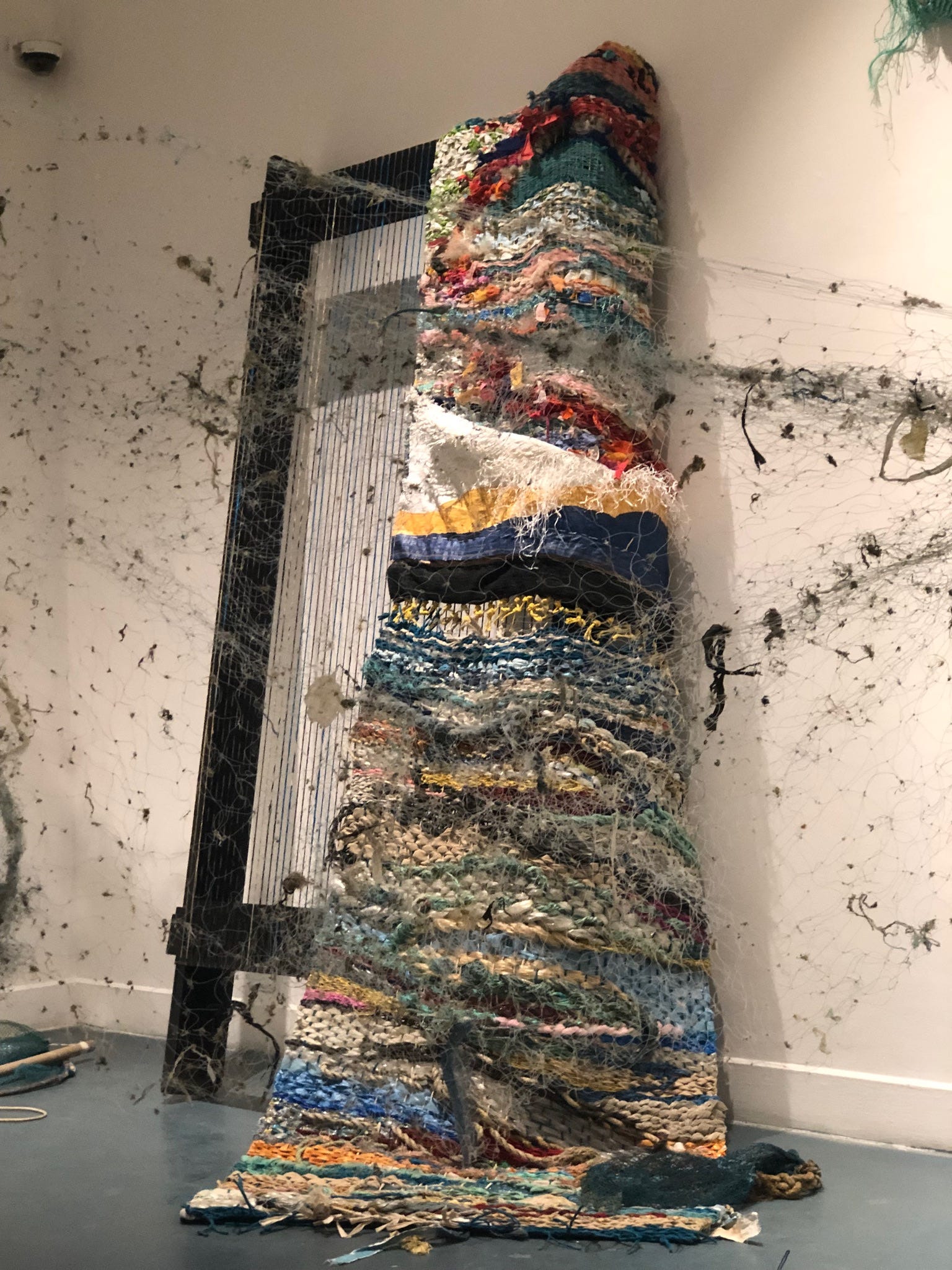
Over size tapestries, sculptural objects, sea creatures and more – all created from waste from the ocean bear testament to how the arts can facilitate a different connection to ourselves and our environment and change that is sustained by working magic with our hands and our hearts tuning into that which is essential – a deeply held connection with the earth and its life-giving waters; with the landscape which we inhabit; and our connection to each other and ourselves.
Weaving Interconnections is a project that I undertook and executed from September 2023 to February 2024. I attempted to bring together my three passions – Community, Art and Nature in a way that would help us shift our consciousness and awareness of what we see around us, how we respond to it, where we can make a change, and why it is essential to do so and who we become in the process of such an engagement.
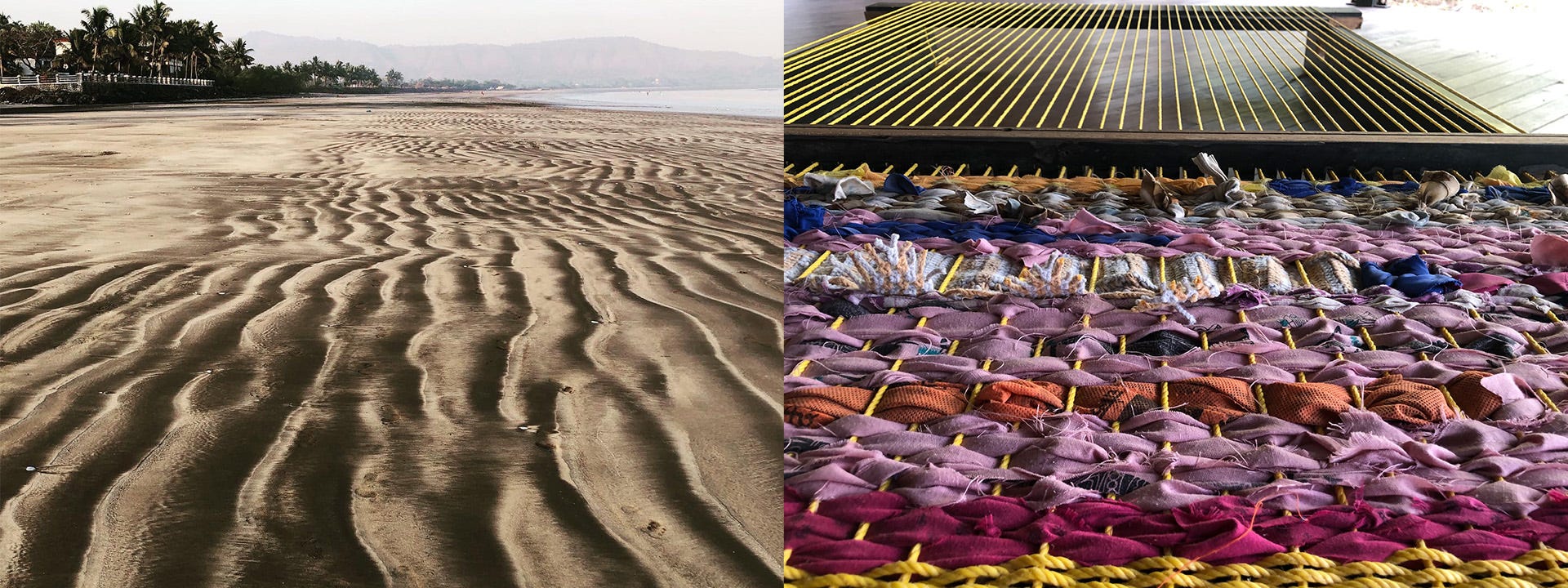
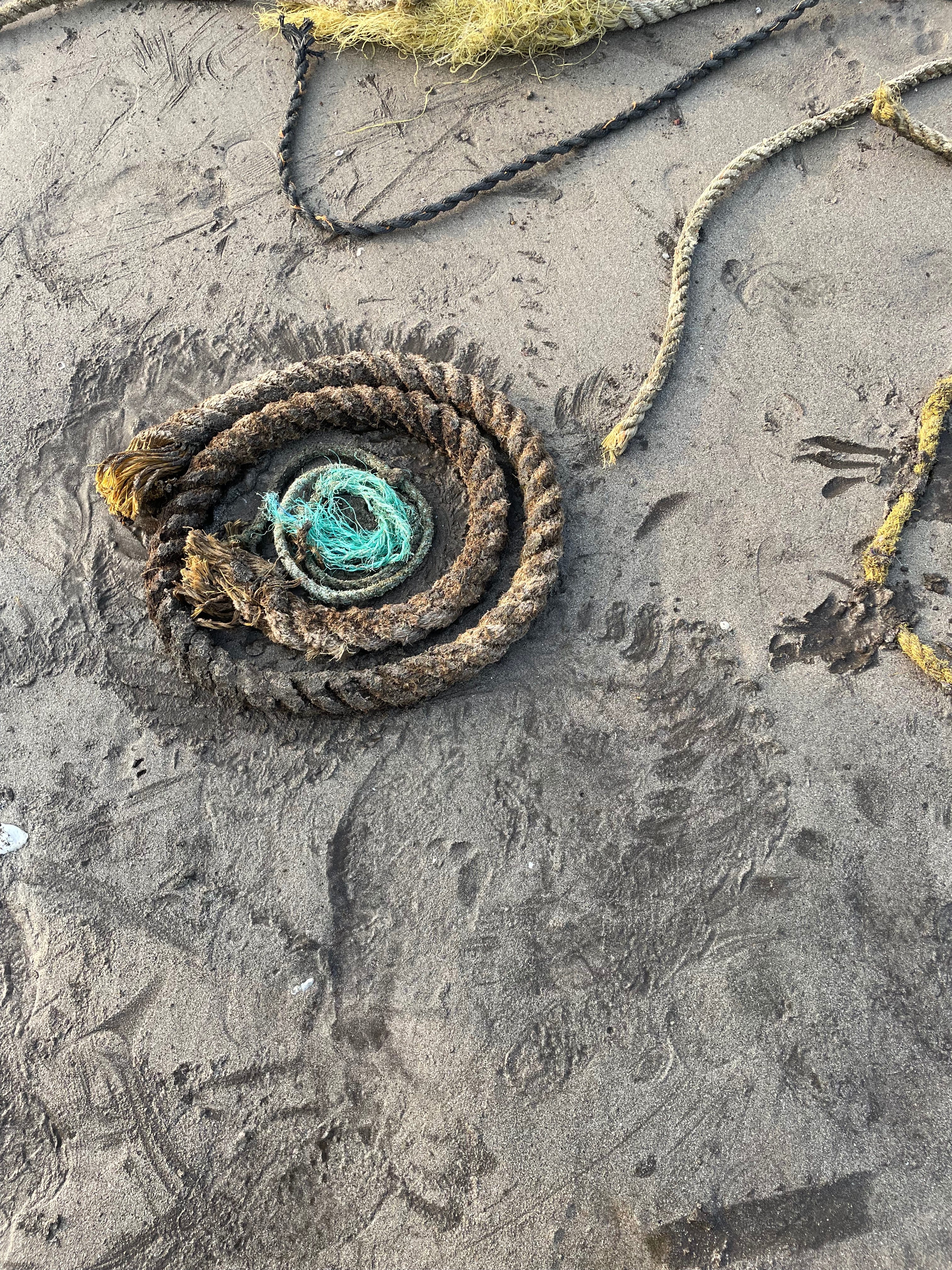
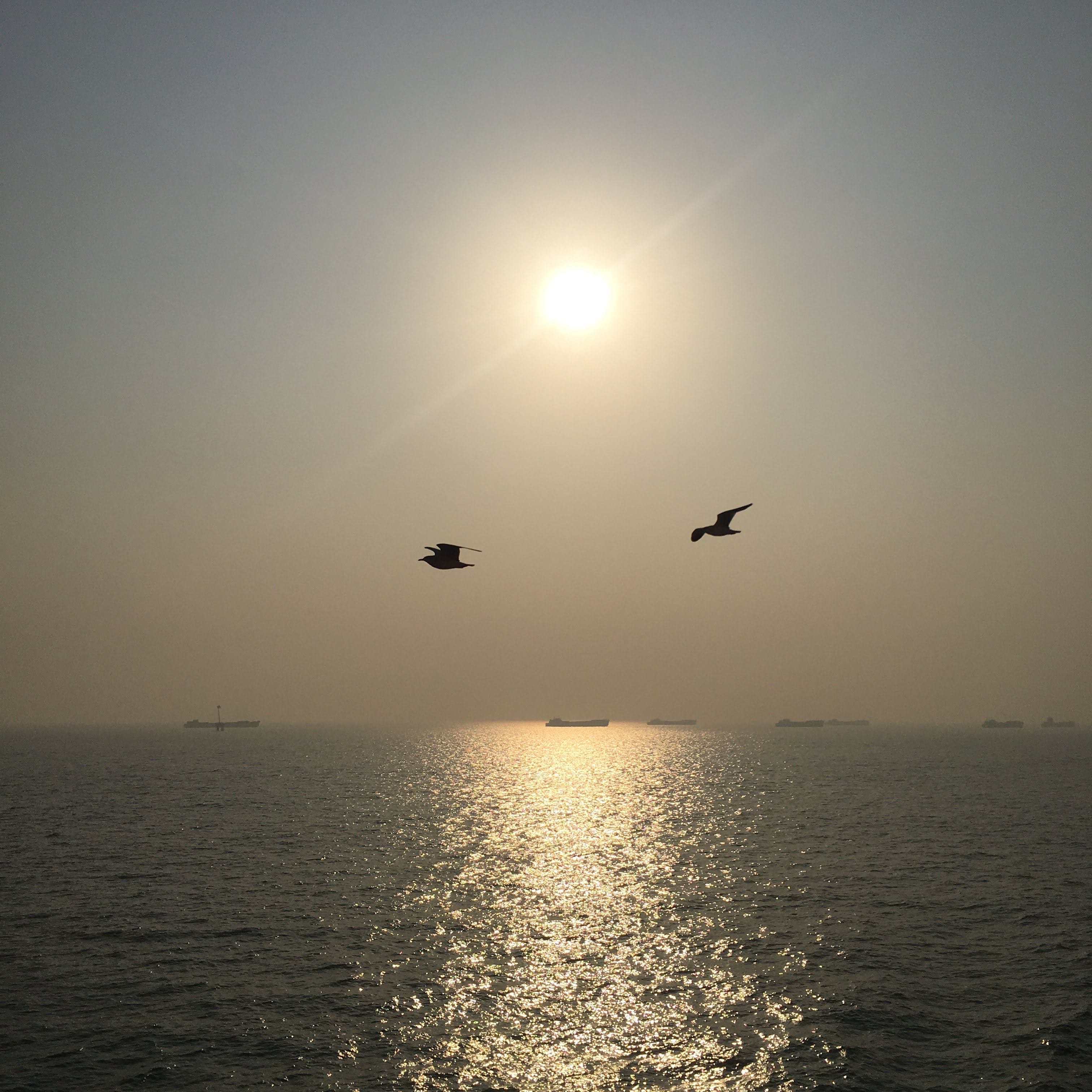
The initial idea was simple – pick up litter and garbage from the shoreline along my studio and weave the collected waste into an oversized tapestry. The concept was formulated sometime during my barefoot walks on the beach, where I would stroll with my dogs, letting my eyes feast out the open vistas that ocean provides, hugged by the sky above – continuously shifting with the seasons – cloudy during the rains, bright white in the afternoon sun, or brilliantly light up with oranges and reds at dawn and sunset. My eyes would wander closer to the brown-grey waves crashing gently on the shallow beach, patterned sand in different colours stretching all along the intertidal zone; little crabs and snails, birds and animals leaving their markings on the wet sand. And then my eyes would catch a hint of colour or a strange object which, from far, could it be a rock, or a stranded marine creature? But on closer inspection I saw woven plastic bags half embedded in the sand, or saris twisted into sand so heavy almost impossible to dig out, or the remnants of a bags, shoes, ropes, nets, plastic bags, floating devices, tetra packs, shampoo bottles, rum bottles, tooth paste tubes, bottle caps, toys and much more left behind or swept in by the sea to dot the sandy landscape.
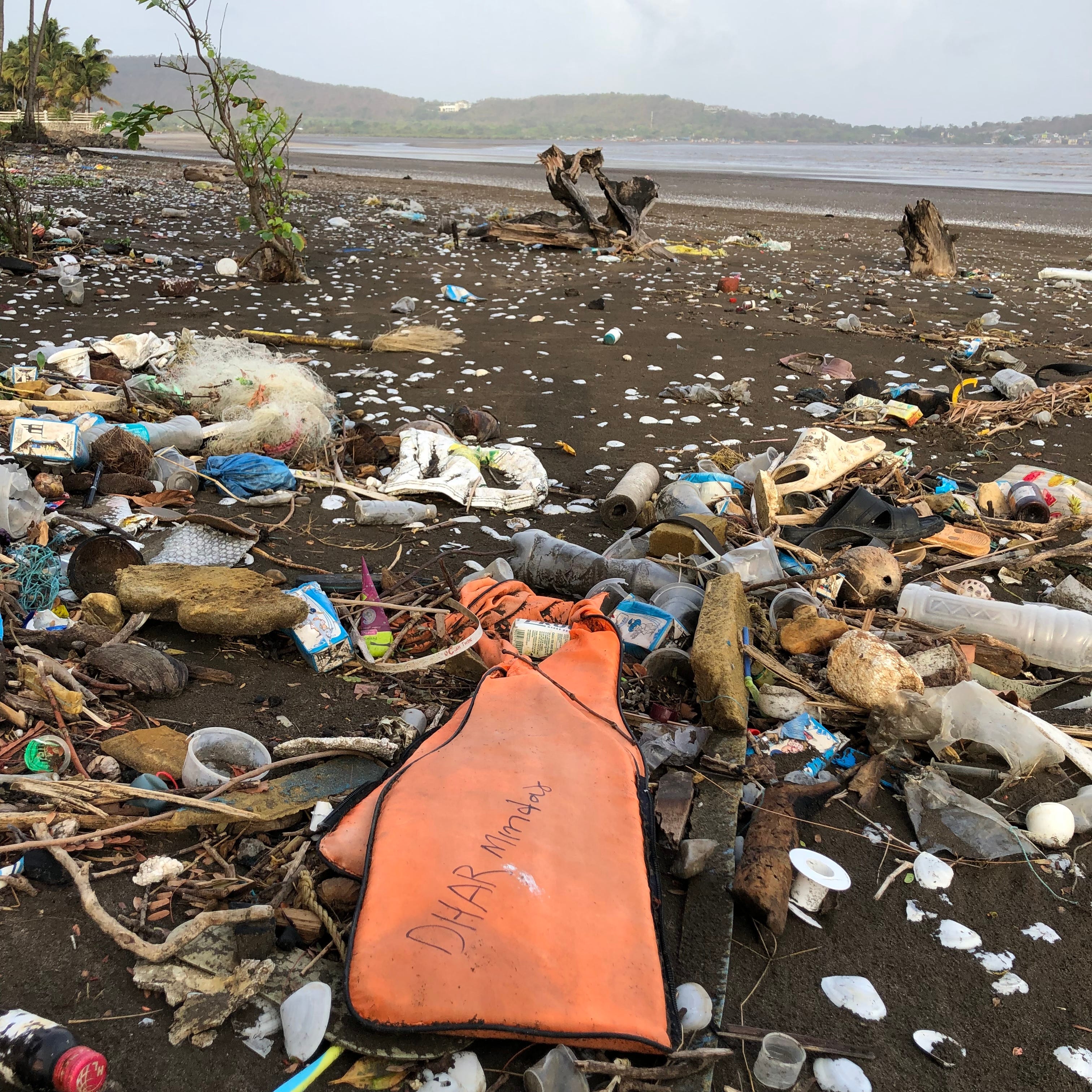
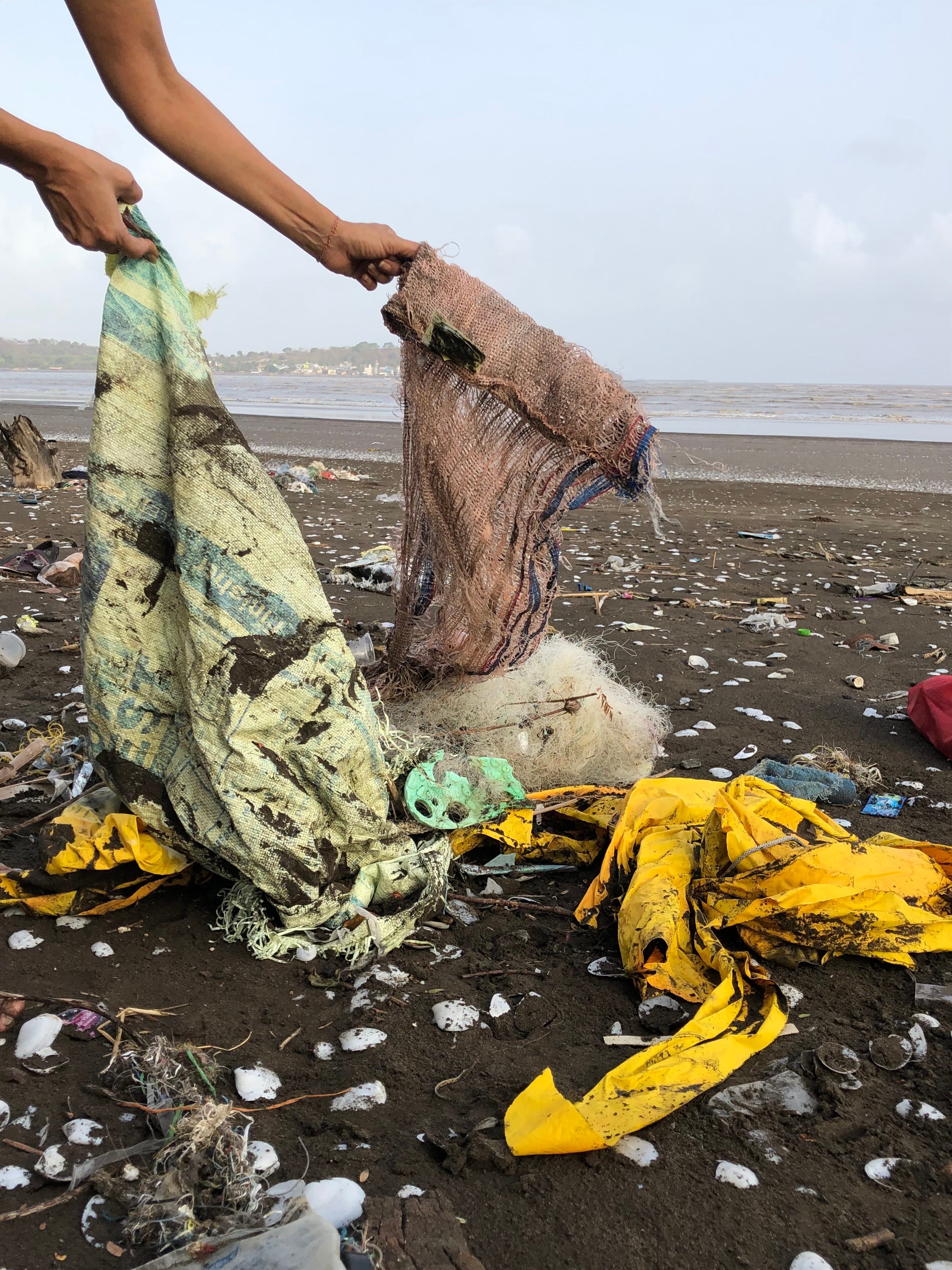
I felt a need to respond to these artefacts of our culture and lifestyle that were slowly but surely being embedded into the landscape of our shoreline, not out of intentionality, but rather out of callousness, disregard, and disconnection to the web of life around us. So, when I received a fellowship to facilitate a community art-based project along the shoreline based on my proposal to use art as a way to highlight aspects of climate change, I dove deep into those waters of discontent, the inner need to affect change, and claimed that part of myself that felt deeply connected to place, to nature, and to human ingenuity and creativity to explore how we may shift perceptions and facilitate connection and transformative action within communities towards nature by using art as a modality.
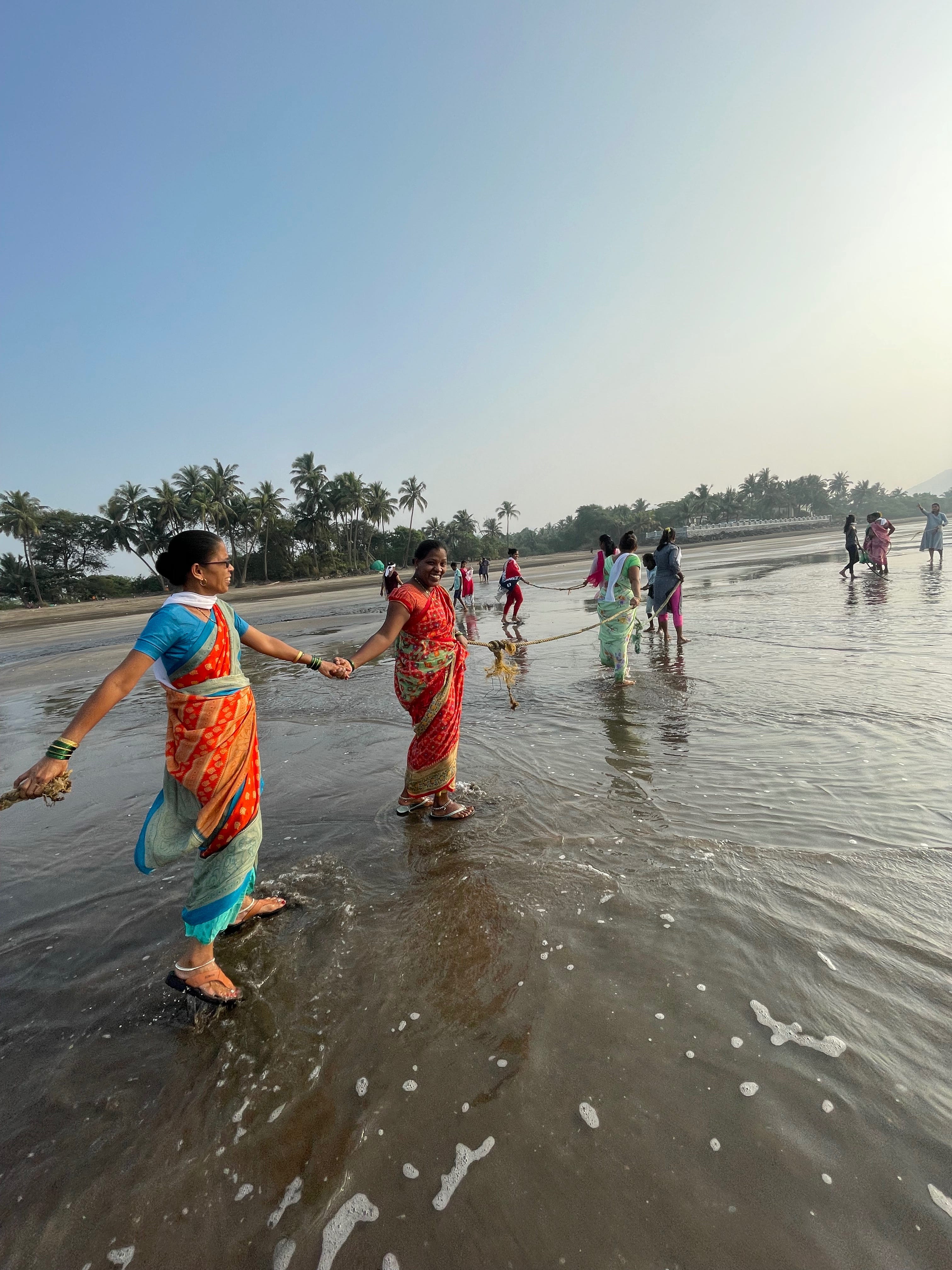
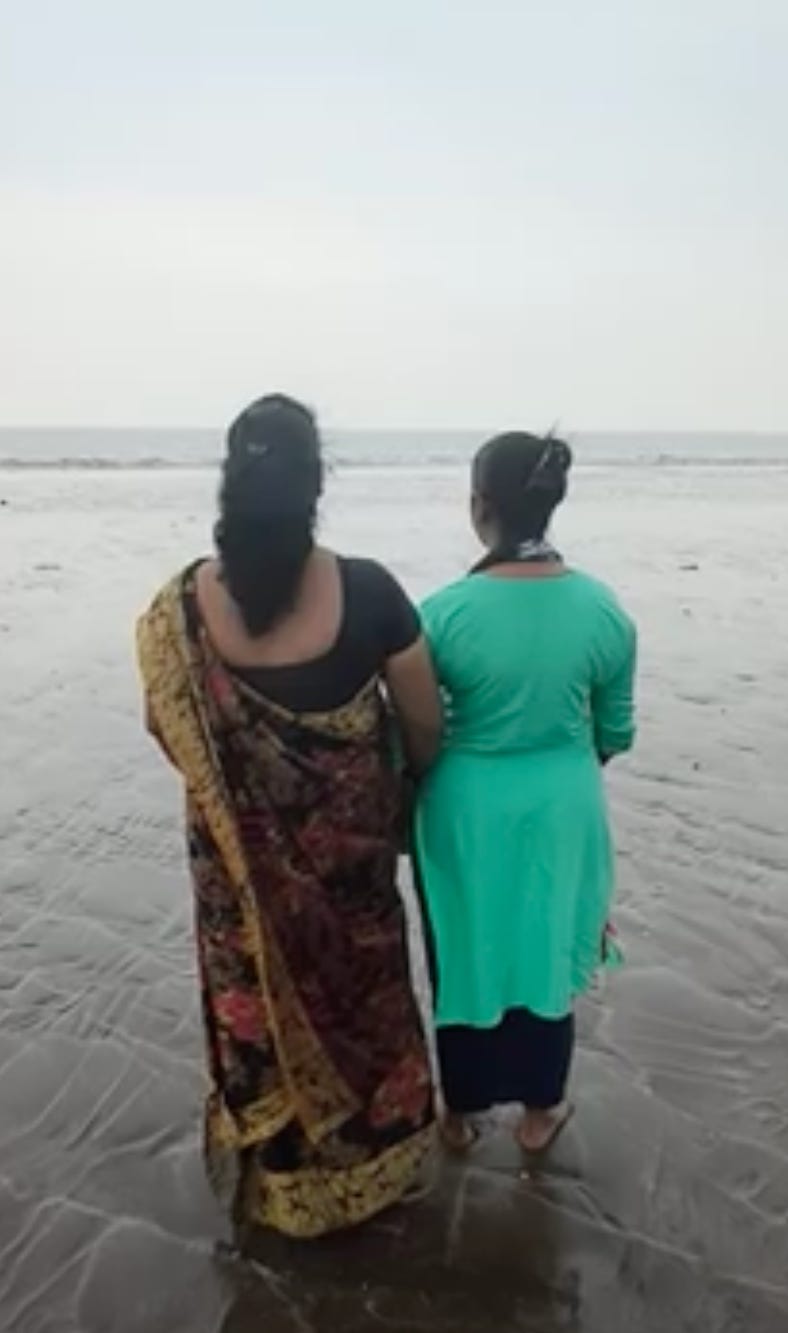
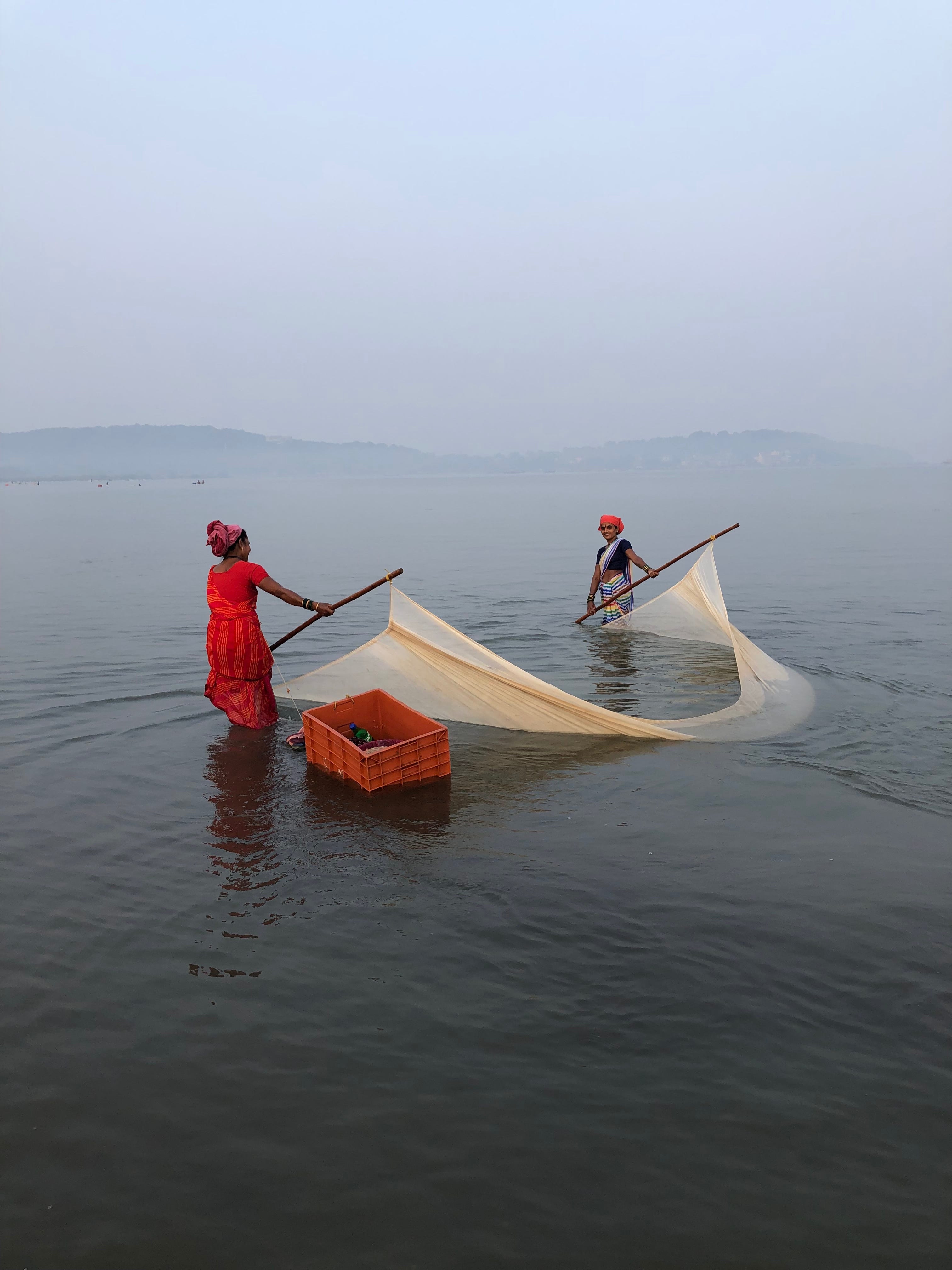
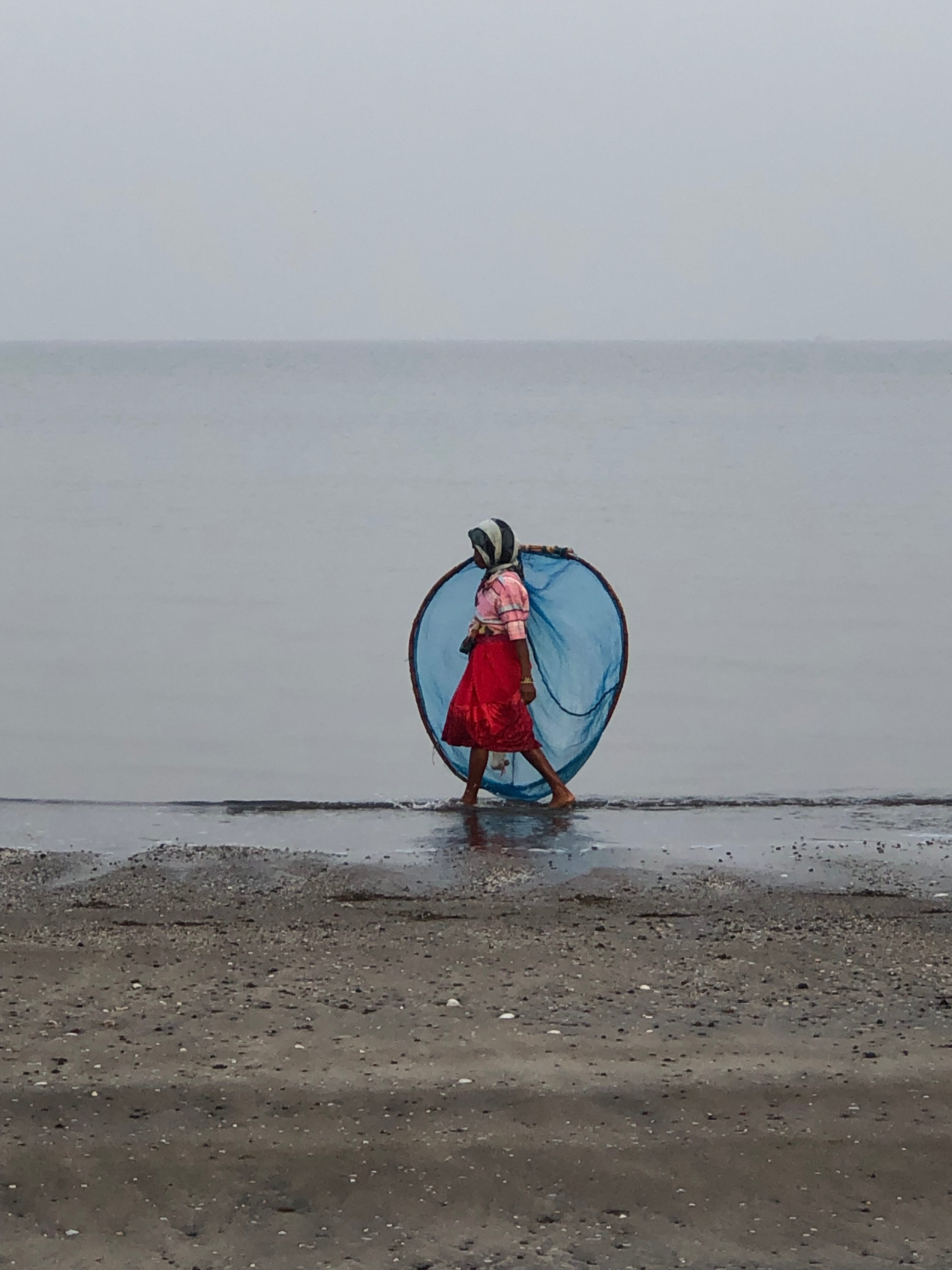
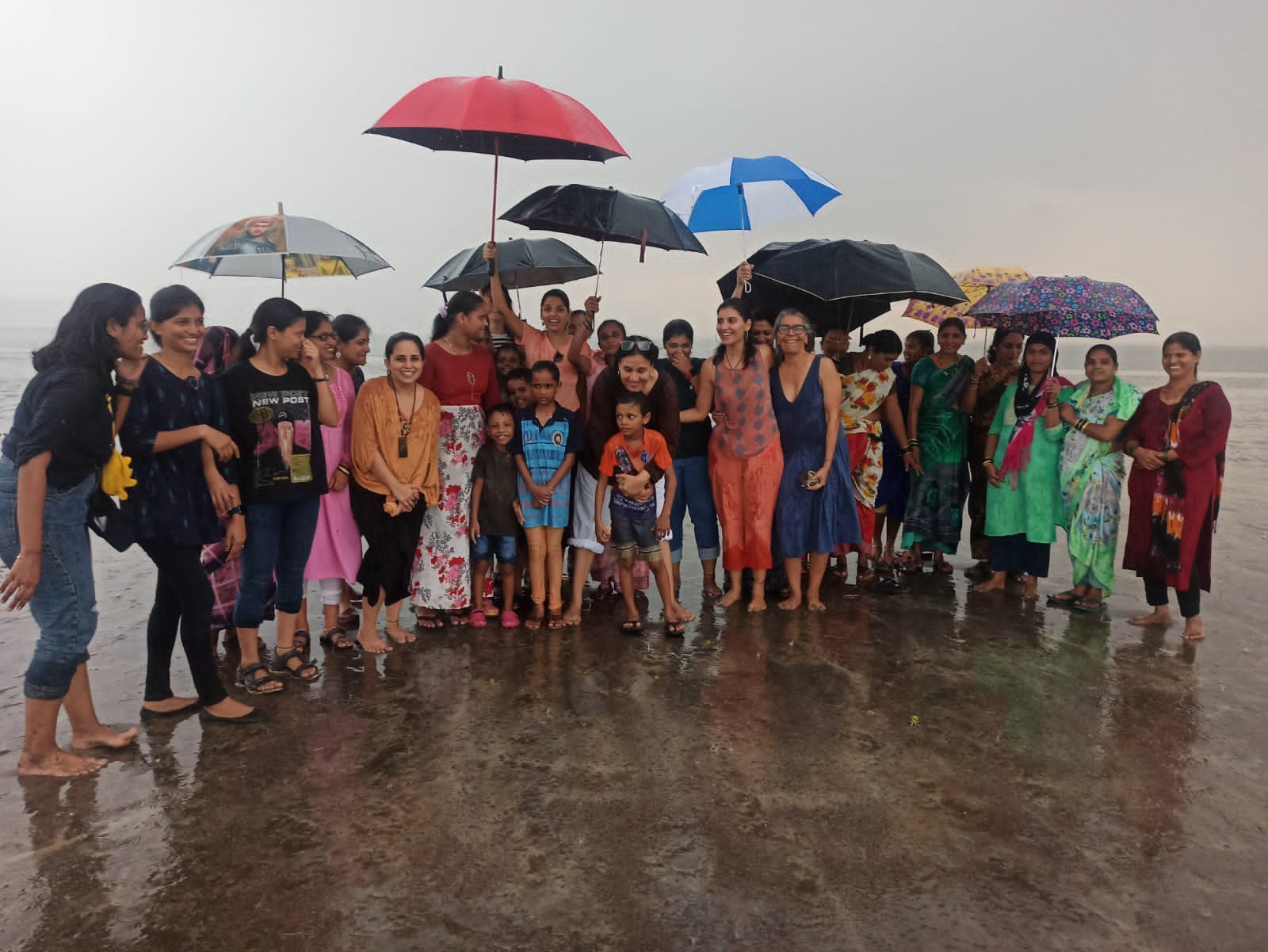
The process began on the beach with women from the villages hugging the shore, gathering to see what these city girls were up to! Expressive Art facilitators from Swahansa India, including Gopika Dahanukar, Lahar Mehta, and Aurelie Beer from France, also joined in supporting the work. It was an overcast day, with the receding monsoon still threatening to shower us with rain, but we started off dry. So even though the skies and ocean were grey, the beach was lit up in colour by the gathering of brightly attired women and children. We connected in a circle and then dispersed in pairs, with one person blindfolded to heighten their awareness and sensation of being present on the shore. It was magical, that moment when the women trustingly walked away to explore in this new way. Upon returning, they spoke of connecting to the silence, the peace, the sound of waves and wind, to the sand under their feet and to the expanse surrounding them. They then went to meet the ocean, giving and receiving any message that the waves might bring to them. They returned to share, seeing the ocean as their mother, the source of life, and their source of livelihood. Connecting in this way was the first time for many; they reflected that even though they live so close, they rarely have the time or take the opportunity to come and greet the ocean in this way. As we were wrapping up, the skies showered us with a downpour, drenching us inside out. Some huddled under umbrellas, and others spread their arms and danced in the rain - an auspicious beginning, we all agreed!
Meeting the Loom
The next day, we gathered at my studio, where I explained the bones of the project. We sat around the 6 ft x 8 ft loom that I had a carpenter put together with repurposed door frames, and began with a prayer that the women normally recite to begin new endeavours. I described the reason for the project and our intention to clean our beaches while we created artwork, which instantly resonated with the group. I shared the materials and weaving we had done so far to explain what kind of things we could collect. Upon seeing the ribbons of plastic and cloth rope in the baskets, the women immediately picked up elements and started working with their hands. Soon, the tapestry was full of elements that they responded to and brought together – adding more colour and texture to the already woven parts.
The Embodiment
It’s never easy asking anyone to join in collecting and handling garbage! Especially in communities in rural India – where stratified systems and taboos related to handling waste still prevail – I wasn’t sure how my proposal would be met. But to my surprise, on day one of garbage collection, 12 women gathered on the beach, and we were on our way.
Over the course of two weeks, we collected about 75 large bags of waste. Stepping out in the afternoon, the work was made easier because we did it together. Sorting and collecting through the heaps of rubbish piled up at the high tide line was not always pleasant, the smell of rot and decay, buzzing of insects and mites, and the grit of sand sticking to the materials and then dragging the heavy wet collection to the studio was at times challenging. But we did it and were joined by more women, bringing up the tally to 20, who were all slightly bemused but also curious about what exactly was going on and about to happen.
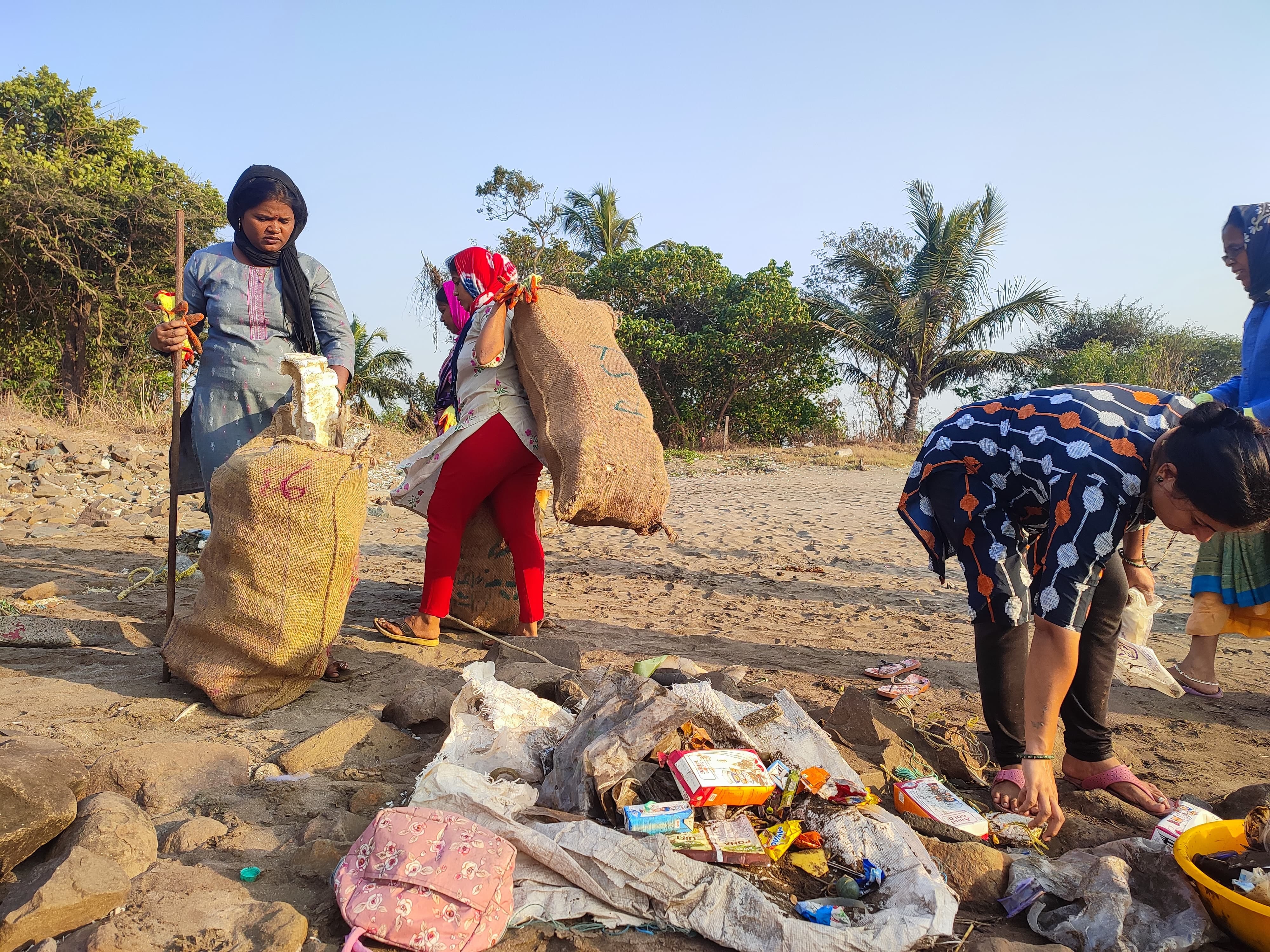
We collected anything and everything that could be remotely used for weaving – that was the initial mandate. And what a collection of materials we found!! From fishing paraphernalia – including nylon nets of all dimensions and fineness, to nylon ropes of all thickness, plastics of all colours and thickness - all in varying degrees of degradation worked on by the sand, salt, ocean and wind. The expected colours were, of course, washed- out blues, yellows, and greens. The surprise was the smorgasbord of colours we collected in the form of discarded fabric – saris, jeans, t-shirts, kurtas, birthday dresses – an entire wardrobe essentially! Adding more colour to this mix were plastic garlands made to imitate marigolds and other traditional flowers used for festivals and ceremonies, which was an eye-opener to see how real flowers have been rapidly replaced and yet the traditional practice of discarding them into the ocean continued.
The experience of collecting, cleaning, drying and sorting the materials was an embodied experience - a sensory awakening of sorts – what exactly are we putting into our oceans? And where is it all coming from? Upon seeing the garlanded plastic flowers from ceremonies, the women were quite appalled and resolved not to use them and henceforth bury the real flowers in the soil or reuse the plastic ones!
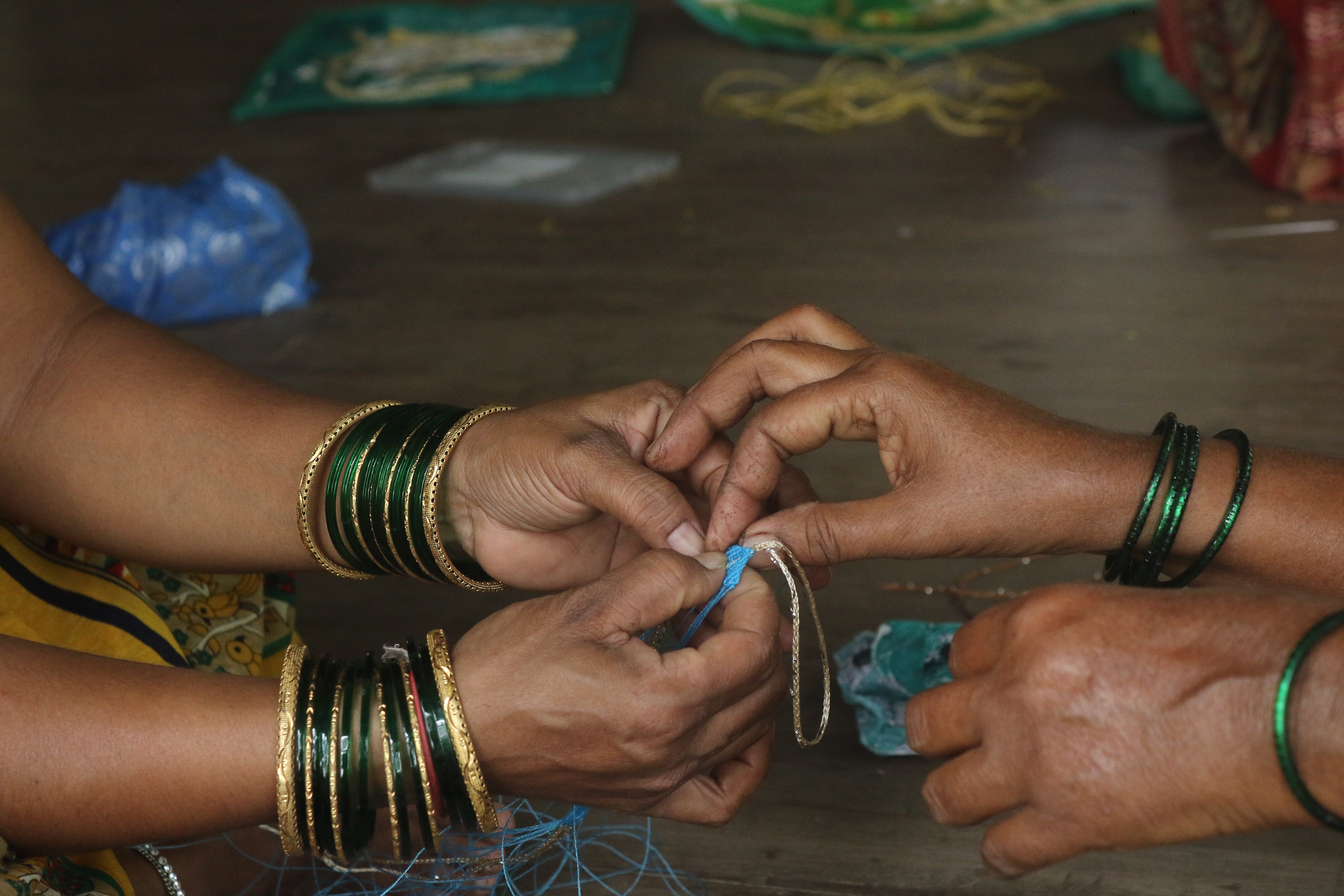
The art-making process began with first simply surveying all the materials we had – their colours, textures, size, flexibility, and composition. By creating categories and further separating materials based on these qualities, we built an intimate relationship with what we had collected. This exploration was a highly sensorial experience, all our senses engaged in the colours, textures, and even smells of the materials. Sand, sea and sun were evoked again in the studio as we observed the degradation, the colouring, and the work of sandy grit on the materials. While personally I was looking for what I needed to build the tapestry, I encouraged everyone to also use their imagination and explore what else we might co-create with these exceptional, yet familiar materials that echo our connection and relationship to the ocean. This invitation generated a burst of enthusiasm as we discussed skills and abilities in handwork and explored how traditional techniques could be applied to transforming the sea-collected materials into art.
Poiesis
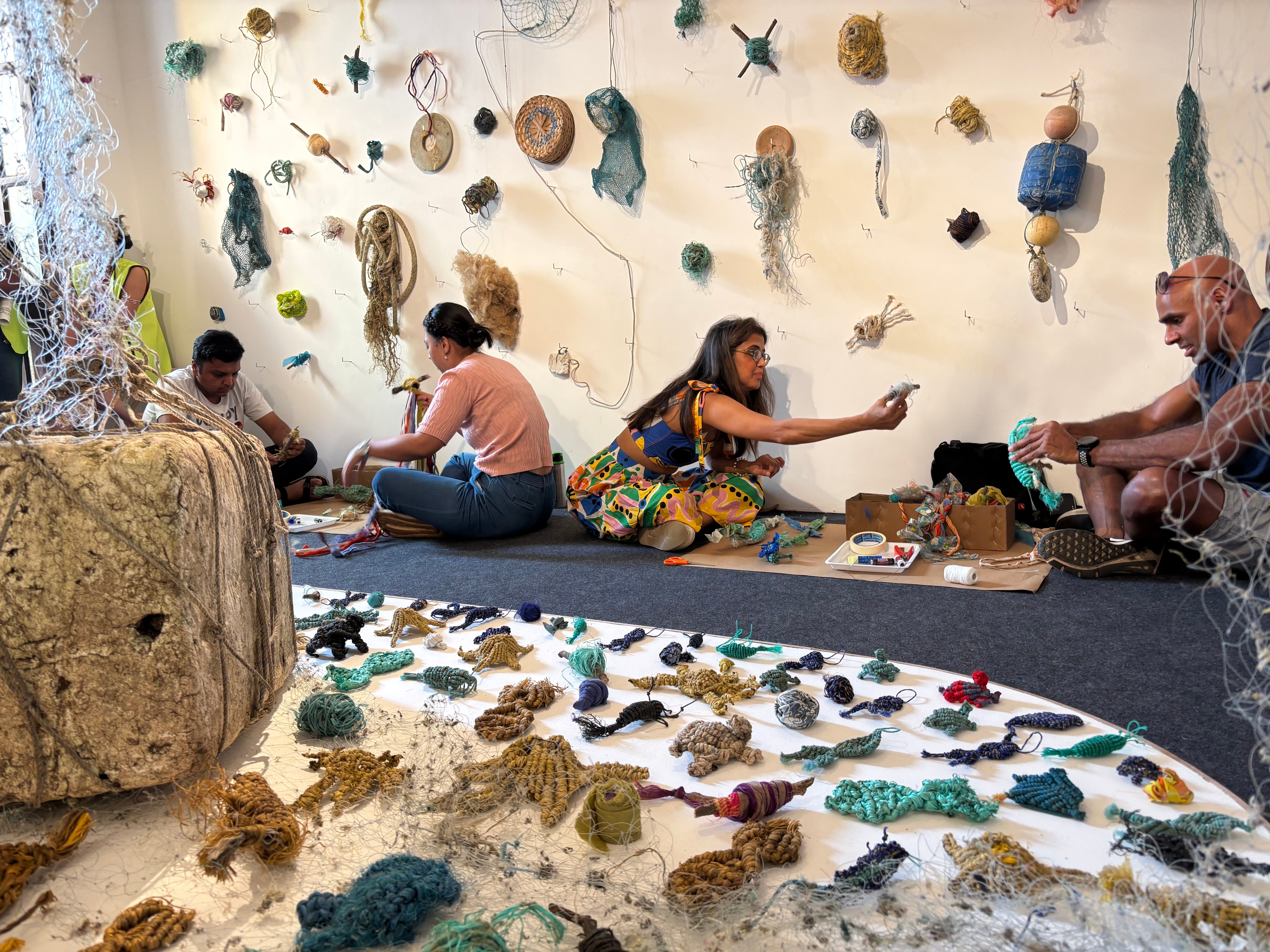
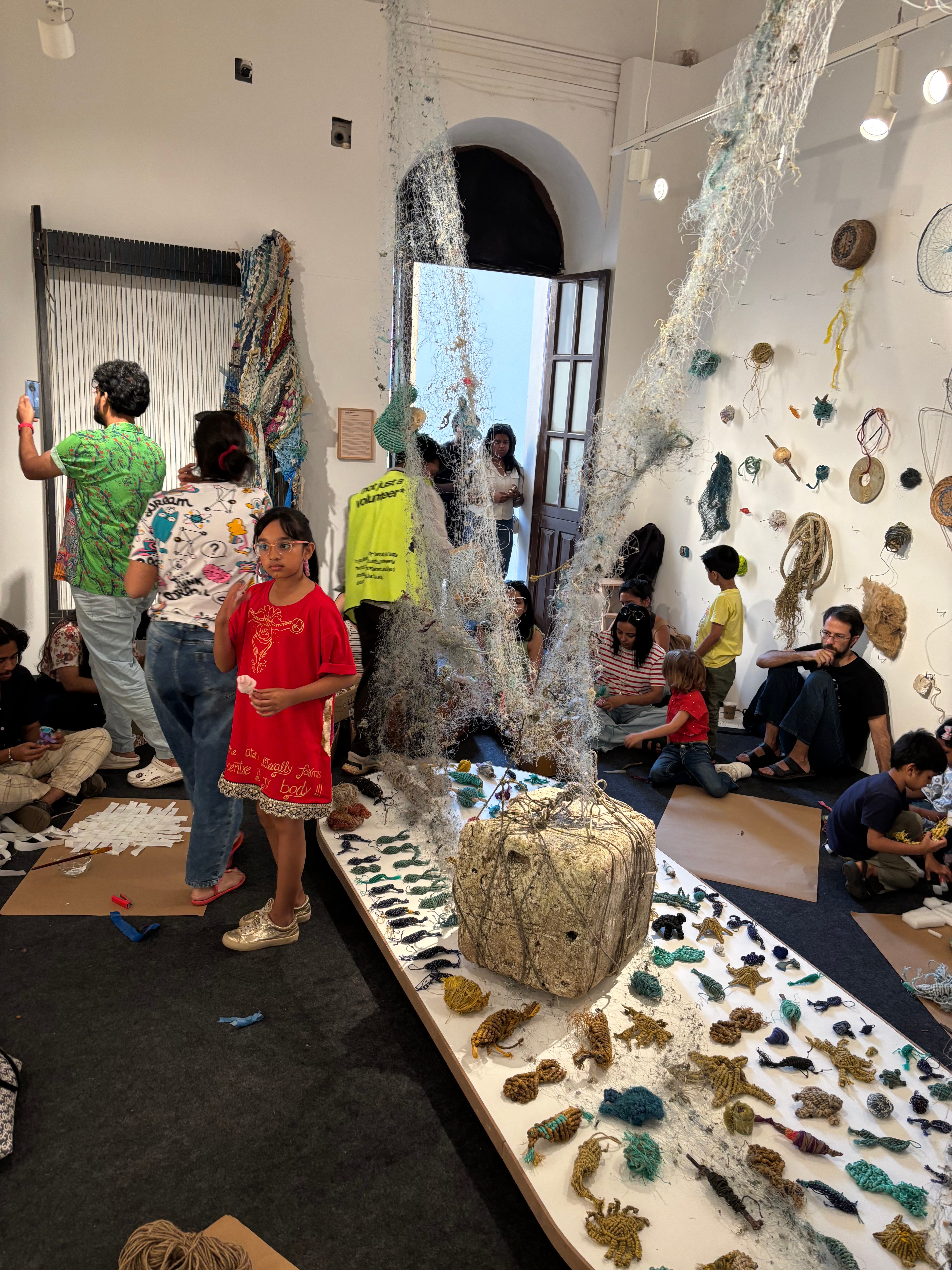
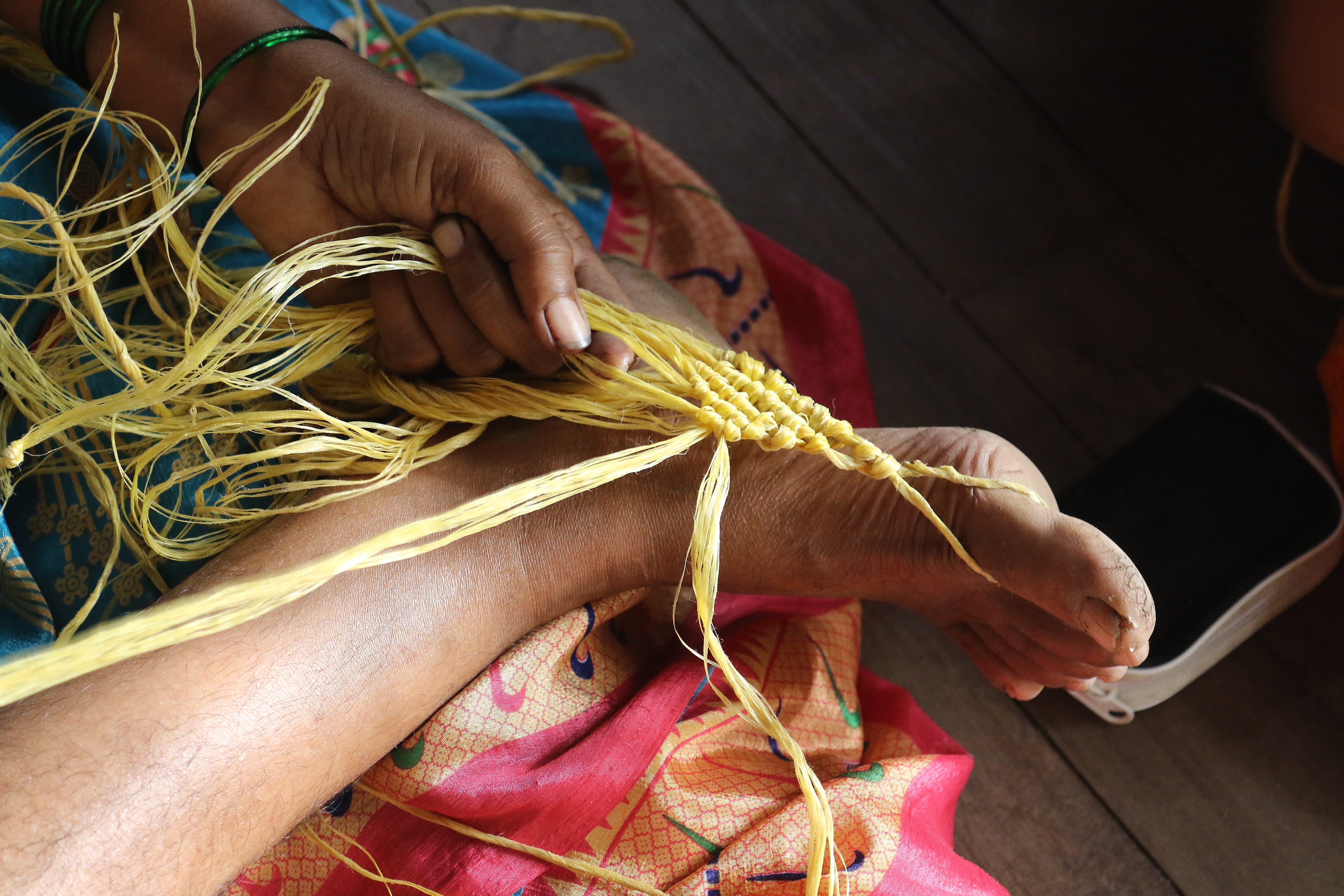
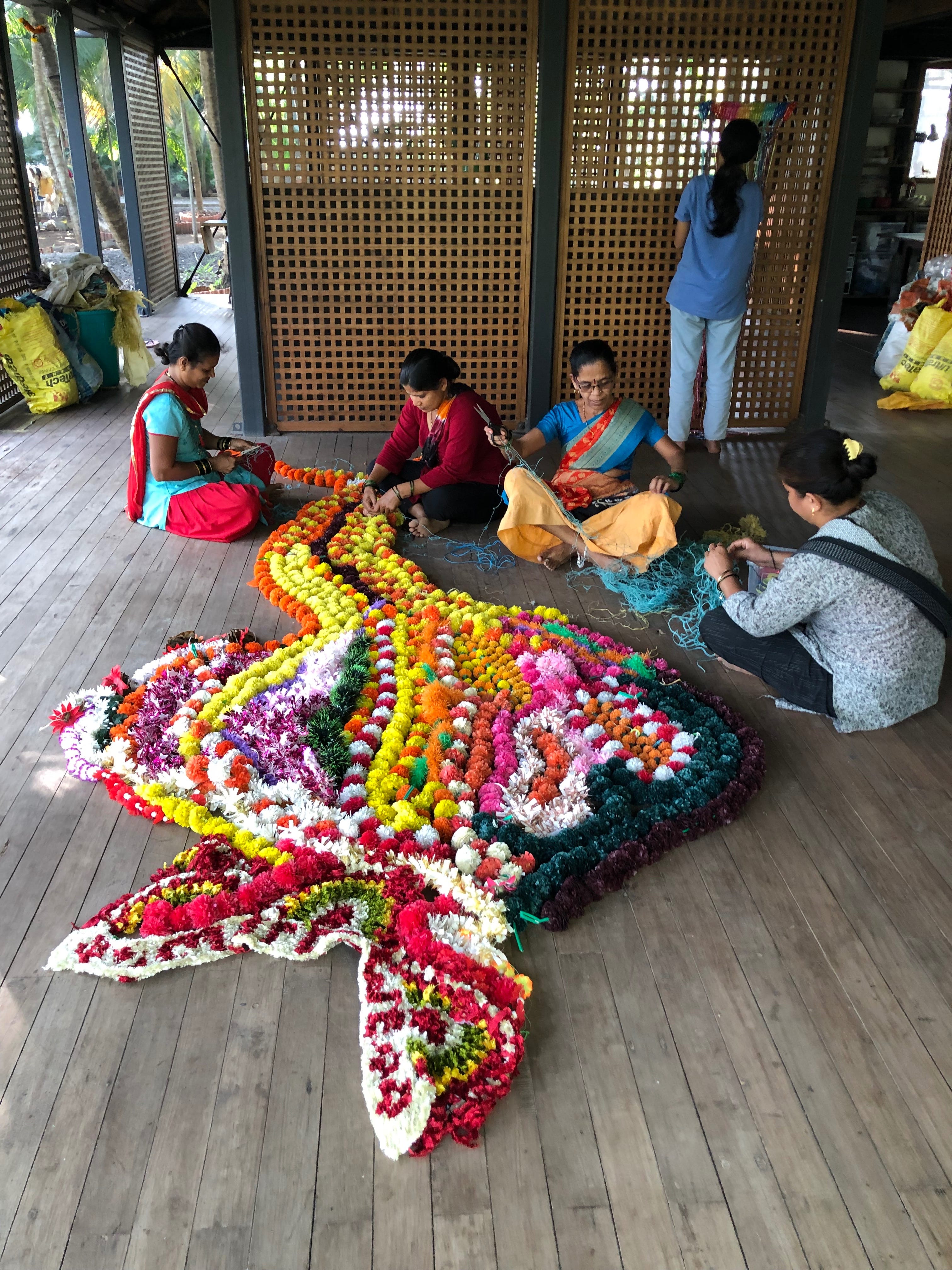
From Ancient Greek, poiesis is the emergence of something that did not previously exist. It is the act of making, as distinguished from theoria (thinking) and praxis (doing). This was the next step in our process. We met in the afternoons from 2 pm to 5 pm, and the studio was full! There were materials, tools, feet, and hands everywhere! Soon we self-organised into smaller groups, some who worked on prepping the materials – cutting fabric and plastic into strips for weaving, sewing and balling up the cut materials to make it easy to use. Others took on the abundant ropes that we had salvaged and selected them for usability based on quality, colour and degree of disintegration, and along with nets, were unknotted, balled up and made ready for use. Another group started making samples and prototypes of objects that might become part of the collection – using skills of sowing, macrame, crochet, net-making, and garland making. It was chaos! There were so many things going on simultaneously with ideas being thrown around, loud fun chatter and camaraderie that it was a surprise that any of us made any sense of the apparent disorder, clutter and confusion.
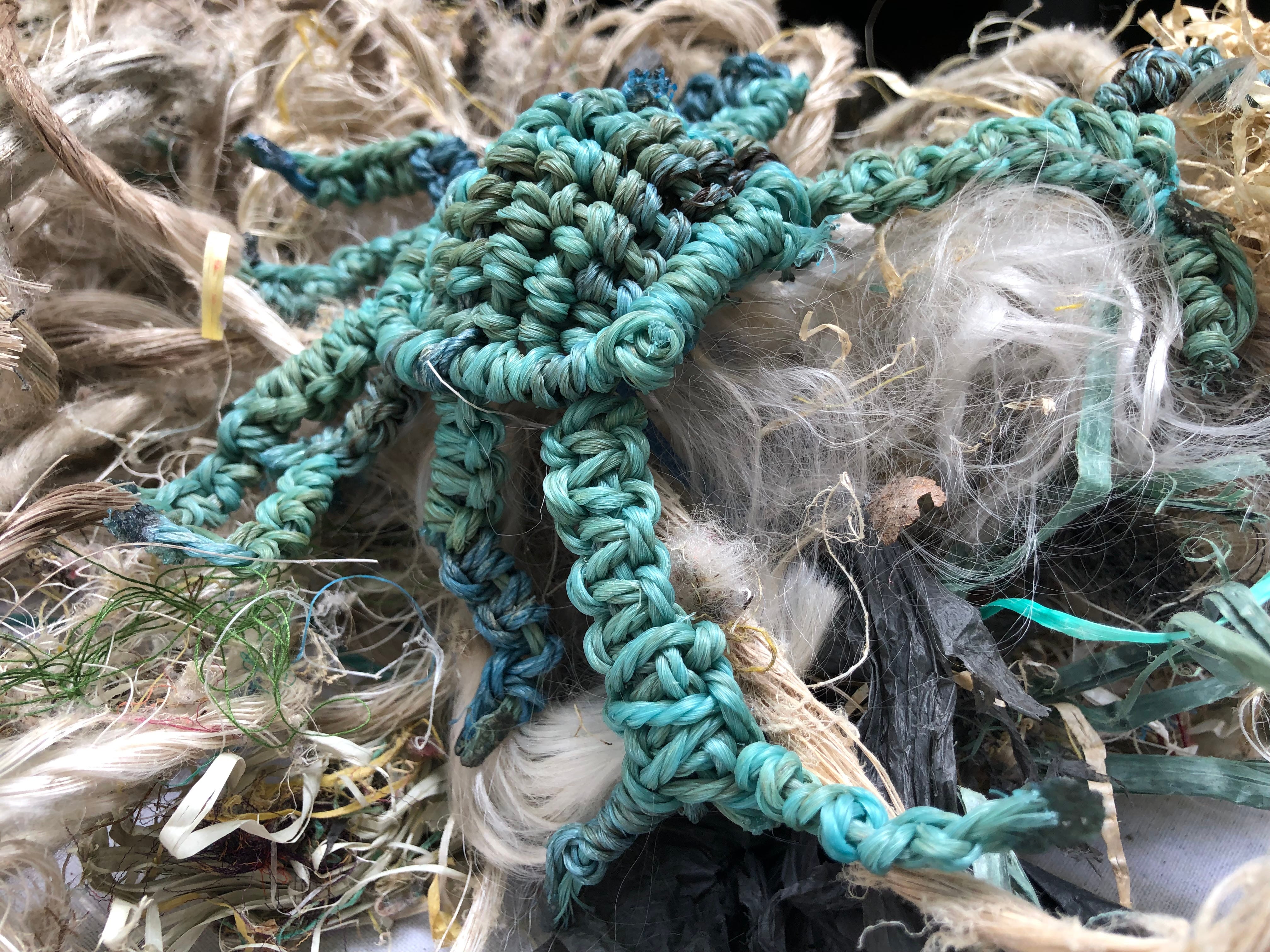
As the process unfolded, some semblance of order settled in, and we found a rhythm. We began by creating an abstract form with the multicoloured plastic garlands collected post the festival of immersing Lord Ganesh’s idol into the sea. We laid out the strands and they started taking shape – from imagination into form, creating space for the emergent, at times taking the form of Ganesh himself, and for others, maybe a puffer fish, a poisonous bottom feeder of the sea – an apt analogy for the material that it was made of! Making small and large sea creatures in macrame became a favourite amongst the group, and together they unravelled ropes and selected those still in usable condition, of different colours and thickness. Learning from Reena, the queen of macrame, (and a member of the group) how to work magical knots into little shrimps, big shrimps, little fish, big fish, crabs and star fish – they worked on their individual pieces using hands and feet alike, while all the same time chatting, sharing and learning from each other. I became a co-creator and collaborator interwoven into the process as I drew on myriad skills and experiences available in the group. The energy of working together was such that it carried us all together, taking what otherwise had been discarded and rejected and forming something new. By attuning to what had arrived and the threads that emerged in our work together - we wove not only the materials, but also ourselves – our histories, experiences, memories and ecologies– into the making.
Alone Together
As the work progressed, I felt I wanted to do something that highlighted each woman’s experience of the project and the process. To find a way for each one of them to give expression to their own stories, of their lives, their hopes and joys, their surroundings and their present. This would pose a challenge, given how easily and willingly they worked together; I had the feeling that working on their own might not come as naturally. So we began by conceptualising what we could do together, working with the materials and discovered cement bags that would make excellent canvases for what we wanted to do. Yellow bags were selected to be sewn with a green border of nursery shade material, and then we would be on our way. Challenging ourselves to translate our stories and experiences into expressions using the waste materials from the sea was an invigorating, highly imaginative and fun process. The frame was set for each one to find one particular aspect of their lives that they most deeply connect with, give it form through the materials available and discover what was reflected. Some no’s had to be included: no embroidery, no drawing, and not looking at images on the phone. We gathered over two days and worked our way towards self-expression within the group.
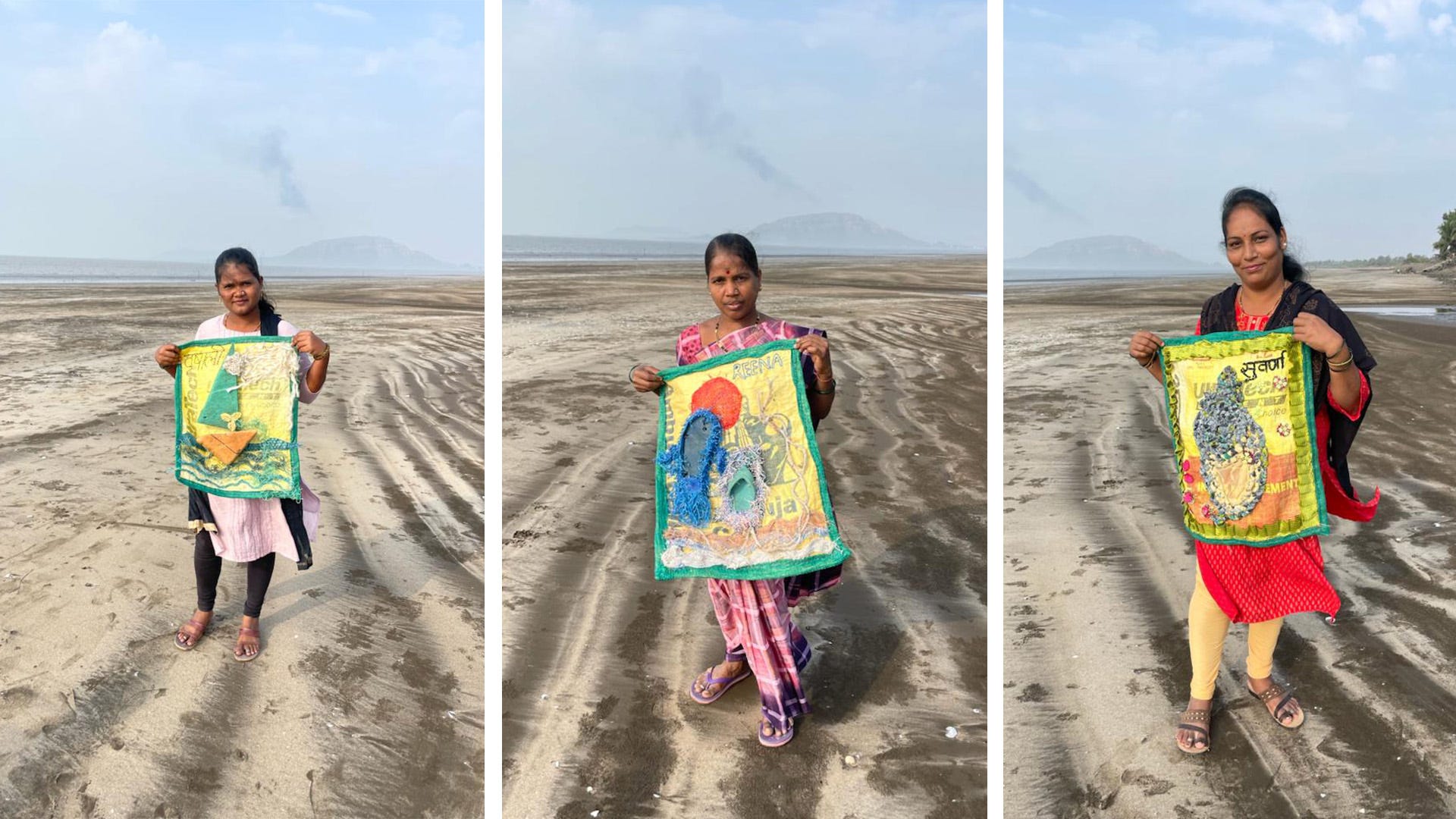
Alone together felt very much alive during that time, as we rummaged through the detritus collected and deliberated on how to transform it into our own story. The wealth and range of materials utilised and the expanse of imagery created were a treat to the eye. And at the end, each one was proud of their expression, sewing their names into their individual cement bag canvases and then bringing them all together as a grid, connected in form and structure and unique in expression and imagery. Like a metaphor of the inner and outer landscapes we inhabit, ocean, earth, wind, and sun as the ground of connection, each individual found their unique form, function, and inner truth within that matrix.
Creating a Culture of Care
I have selected those aspects of the project that highlight what I found essential and at the core of the work as it progressed. We began completely fresh, without too many concepts and expectations. The work evolved by responding and embodying that which showed up and following the just right next. What was taken care of during this work were the following aspects that I feel made this project so special and dear to me. The first is connection – to our environment, to nature, to each other and to ourselves. Art making facilitated this connection intimately and in a wholesome way, as we connected to our hearts as we co-created using our hands and our senses. Closeness and community were the bedrock that sustained the work and kept it going despite the challenges. The second is freedom – to explore, experiment and co-create. The project opened a space which allowed our imaginations to wander and discover what was possible, the potential within materials and ourselves – building skills, trying different approaches and devising ways to bring into form what we sensed into during the process. And lastly, there was a sense of beingness – the ability to be engulfed, embraced and rooted in what we are, and who we were becoming. Together and alone, we interwove the threads of community, art and nature into a greater tapestry that told a story of how creative expression can cogently transform our perceptions, beliefs, and actions to facilitate change and sustainably address the eco-human crisis by responding to and taking care of that which is in our care.
My gratitude and thanks for being the recipient of the Sustaina India Fellowship that made this project possible; to Swahansa India for supporting it with enthusiasm and courage; and to Markus Scott-Alexander for creating a wonderful frame and holding space to allow its emergence. And to the women of Nari Shakti Samuh (women’s power) of Navkhar village for joining me wholeheartedly, without question and inhibitions, and with so much enthusiasm to bring this into fruition. Without them, this project would not have been possible.
Weaving Interconnections began at the studio on 29th September 2023 and culminated with the works exhibited as part of Sustaina India’s inaugural exhibition ‘Ears to the ground, Heart on the Horizon’ held in February 2024 in New Delhi, India, under the title “There is no such thing called waste.” It was also a part of The Serendipity Arts Festival, Goa, India, held in December 2024 as part of ‘Multiplay’ – an exhibition revolving around active audience participation.
The following video was created through an encounter and in collaboration with filmmaker Ashwini Choudhary.
I continue to work in different ways with the women and the sea-collected materials to develop products, and also put in place a waste management system in the village, including beach cleanups, so that we can take care of our surroundings as we simultaneously take care of ourselves and each other.
About Rachna Toshniwal
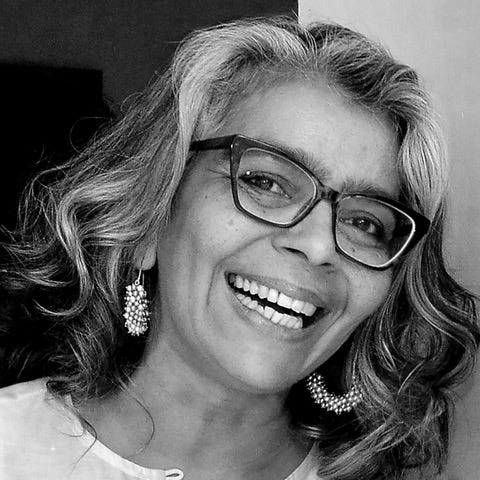
Creativity, community and consciousness are the three pillars of Rachna’s artistic explorations. She uses the arts to dive deeper into questions of self, nature and ways of being; enquiring into the idea that we are nature. Her practice spans, visual arts, performance, creative writing and installations. She lives and works in Mumbai, India
Thank you for this beautiful unfolding of a magnificent project! Beauty found in the discarded, beauty created with the discarded, and beauty ignited through the discarded. So much joy and inspiration! Thank you!!!